
I still remember joining Vodafone and, on my very first day, while getting me up to speed, my direct manager told me about Lowi's Go To Market strategy.
Go To Market? WTF is that?? I thought…
Of course, from the context you can obviously work it out, but it was something I'd always called a launch plan. Or something similar.
And yes, at multinationals –especially in marketing– lots of English terms are used. And even more acronyms.
So I'm going to share my take on what it is, what it means, why you should care and a few examples, so anyone who doesn't know what it is can understand it and avoid what happened to me.
Also in case you have a business or an idea you want to launch, so you can learn about and use a methodology that works.

Definition and meaning of Go To Market
Let's start at the beginning.
Go To Market (GTM from now on) is, as I said, the launch plan for a product or service. . An action plan describing how a company will introduce this new product or service to the market.
In other words, the strategy (based on the reasons) behind that launch.
Its goal is to establish a roadmap so that:
- We are clear on how we are going to offer this new product or service to customers.
- We get it to sell.
- Customers are satisfied with the delivery.
Let's say it's the foundation on which the customer's entire funnel will rest –or the flywheel, if we're talking about Product-Led Growth-.
What a Go To Market plan includes
It usually includes:
- Target: identify and understand the market segment that is your target audience, that is, the specific group or groups of customers the product will target.
- Value Proposition: define what makes the product or service we want to launch unique and why it would appeal to the target audience. Watch this one: if it isn't well defined, it's why many projects fail.
- Distribution Channels: decide how the product will be delivered to the customer. For example, with ecommerce, an agency will usually deliver the orders we prepare to our customers. With a SaaS, on the other hand, it's normally an account-creation confirmation email that gives us access to the system.
- Pricing Strategy: the pricing sets the price we will charge for our product or service. There are different strategies (competition-based, according to our target, annual-plan offers…)
- Promotion and Marketing Strategies: basically, the marketing plan. It will include our channel mix (traditional and digital) and, above all, our communication and public-relations strategy.
Obviously, the GTM strategy will vary depending on the type of business, the product/service, the market and the competition.
A tech startup launching something completely disruptive –think ChatGPT– is not the same as a traditional multinational –such as Procter & Gamble– introducing a new shampoo to the market.
Both projects will have their launch plan. And both GTM plans will include the same 5 points. But their content will be worlds apart.
Examples of Go To Market strategies
To dig a little deeper into what Go To Market involves, here are three very different examples I know well because I took part in two of them:
- Creating a service brand (Lowi).
- Launching a multi-brand niche ecommerce (Yo pongo el hielo)).
- Launching a physical product (iPhone).
And although they are very different cases, all of them applied a GTM strategy.
Lowi launch by Vodafone
The OMV (Virtual Mobile Operator, as it was then) was the digital brand of the reds.
These were the elements of its launch strategy:
- Market Segmentation: the name says it all: it targets the low-cost mobile-phone segment, as opposed to the parent brand's Premium positioning.
- Value Proposition: simplicity. Absolutely everything is designed to make things simple: from the tariffs to sign-up and billing. With one disruptive twist (at the time): rolling over unused mobile data to the following month.
- Distribution Channels: sign-ups mainly online, either directly (web form) or by calling the number shown on the page. There was also an in-person channel in MediaMarkt stores. The service was delivered via a SIM card for the phone.
- Pricing Strategy: within the low-cost segment, our tariffs were competitive, but not the cheapest. In return, you could roll over (and share) megabytes.
- Promotion and Marketing Strategies: a great plan that included television, every digital channel (paid and organic) and PR strategies that got the sector's main publications talking about our news.
Given that it was the OMV that reached 100.000 customers in the shortest time, it's pretty clear this was the right strategy.
Launch of my ecommerce Yo pongo el hielo
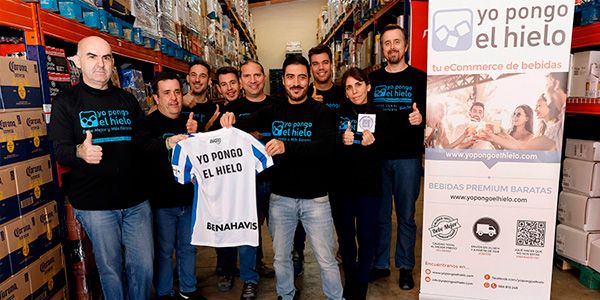
Our online drinks store, which we launched in 2014 with this strategy:
- Market Segmentation: people with medium purchasing power, enough to buy mid-range drinks (from 20€) or higher, and who are digitally savvy.
- Value Proposition: a set of attractive commercial terms: cheaper mid-range and Premium drinks with delivery in 24–48h.
- Distribution Channels: sales through the website. Shipping via transport companies.
- Pricing Strategy: competitive prices in the mid-range product segment. Free shipping from 150€ (suitable for professionals or events).
- Promotion and Marketing Strategies: at launch, only free digital channels (SEO to acquire customers and email to retain them).
Although I'd change it quite a bit today, at the time and with the resources we had, it certainly worked.
The €2M it currently turns over probably wouldn't have been possible with a different GTM.
Launch of Apple's iPhone
I don't think the brand needs any explanation here, but the pillars its launch was built on do:
- Market Segmentation: people with high purchasing power and a somewhat tech-oriented profile.
- Value Proposition: a huge touchscreen (for the time) and an app store with all kinds of software. Stronger ties to the Apple ecosystem.
- Distribution Channels: own stores (physical and online) and partnerships with the main carriers in each country, with the option of getting subsidized handsets.
- Pricing Strategy: Premium prices that reinforce its brand positioning.
- Promotion and Marketing Strategies: although they use traditional channels (TV) and digital ones, their strategy is more PR-based (public relations, providing handsets to specialist media so they can test and discuss the products) plus events.
It marked the beginning of the "smartphones" and killed off the "feature phones" that came before (and the market leader, Nokia, along the way). That gives you an idea of its success. Not much else to add.
The different Go To Market models
As you can see, GTM and its components apply to every kind of launch. But you can take it one step further.
Depending on the type of business, brand, product or service, there are models that approach the plan differently.
Want to know some of the most popular ones?
Go To Market for DNVBs
The DNVB (Digital Native Vertical Brands) are brands born on the internet, bypassing traditional (physical) distribution channels and dealing directly with the end customer.
In Spain there are several you'll almost certainly know:
- Hawkers.
- Blue Banana.
- Scalpers.
- Hoff.
- PlatanoMelon.
- …
Obviously, each has a different GTM, although they share certain general aspects:
- Market Segmentation: different in each case, but you could say they target people looking for the “Smart-choice”: the best value for money, rather than focusing only on price.
- Value Proposition: high-end products at a lower price.
- Distribution Channels: a similar growth strategy: online channels first, then a physical channel and, once revenue passes €10M, internationalization.
- Pricing Strategy: lower prices than similar-quality products from traditional brands.
- Promotion and Marketing Strategies: focus on content creation –often inspirational– and, to a lesser extent, building a community. As a result, social media carries huge weight in their marketing plan, alongside influencers.
If you're thinking about starting a surfwear brand (or any kind of brand) or you're simply interested in the subject, don't miss this video:
GTM within a Product-Led Growth model
Although in this article (which I've already linked above) you have much more information about this business model, I'll summarize it by saying it consists of building a digital product so good, that your main source of customer acquisition is virality, together with recommendations.
It's the model used by Netflix, Spotify, HubSpot, Canva…
What's their GTM:
- Market Segmentation: they offer different services, so the target audience varies.
- Value Proposition: although it differs for each service, almost all offer simplicity, ease of use, self-service and significant value for the user.
- Distribution Channels: they are generally digital platforms, so the whole process (sign-up and account creation) is online.
- Pricing Strategy: model freemium: a free plan with limitations (time, volume or features) and paid plans that progressively offer improvements.
- Promotion and Marketing Strategies: focused on the product and the customer. The main goal is to create a product so good that users become promoters and bring in more users. It can be combined with other digital strategies (content, for example), but those are secondary.
For more info, take a look at the article I linked. If you manage digital products, there are plenty of good practices to learn from this model.

Go To Market for a Local Business
In this case, I'm going to focus on clients of mine (psychologist, lawyer, coach, chiropractor) who sell services delivered from their practices / offices / facilities.
In every case, the model is very similar:
- Market Segmentation: because they provide different services, the target necessarily varies, but in every case they look for people in the same city or within a few kilometers (who can come to the office).
- Value Proposition: again, it's different in each case. It depends on the service.
- Distribution Channels: this part is similar: lead acquisition through the website and service delivery at their own premises.
- Pricing Strategy: each has its own, depending on the service contracted.
- Promotion and Marketing Strategies: mainly SEO and SEM. In some cases combined with social media. All extremely inexpensive.
Here, if you like this model and want me to help you set up your business, tell me and we'll see what can be done.
Product Launch Formula: the GTM model for infoproducts
To wrap up the launch models, I couldn't leave out the legendary Product Launch Formula, by the no less legendary Jeff Walker.
A model that has made its creator a millionaire and quite a few of those who have applied it correctly. It's ideal for selling online training, memberships, SaaS…
Here's a summary of the particularities of its GTM:
- Market Segmentation: different in every case. What doesn't change is that you need to know it inside out for the technique to work.
- Value Proposition: again, different for every product. What Jeff does achieve is to make the same proposition move the customer from thinking “OK, I might be interested” at first to “take my money now” by the end of the launch.
- Distribution Channels: they are most often infoproducts (courses, SaaS…), so the channel is digital. The important thing here is that the purchase window is open for only a few days. It's the inability to buy later that creates the buying tension.
- Pricing Strategy: it works for both high-ticket and more low-cost.
- Promotion and Marketing Strategies: the heart of the matter. To start with, Walker focuses on two channels: a good list that he'll send (quite a few) emails to, and creating four videos. These pieces are distributed as follows:
- Pre-launch phase: the first three videos, where you provide value to your audience and which usually follow this format: “opportunity” (your customer has a problem, but fortunately it has a solution), “transformation” (you paint a picture in your customer's mind of what life would be like without that problem, using people's testimonials), “your experience” (you explain the method you followed to solve it).
- Fase de lanzamiento: el cuarto vídeo, en el que ya vendes tu solución. Los beneficios que tiene para tu cliente, testimonios de clientes, atacar sus puntos de dolor… Y aprovechas para añadir la clave: cuánto tiempo estará a la venta tu producto y qué ventajas te llevas si lo compras los primeros días.
- Post phase –launch: now, while your cart is open, you send emails that reinforce the buying tension, including the cart-opening email and advantages of being first, testimonials and social proof, FAQs, objection handling, cart-closing reminders…
It sounds easy, but having (or building) a good email list isn't that simple. Neither is producing the videos and emails, but done well it generates a huge amount of revenue.
Even without adding other digital channels, which you could do (both to capture those emails with a Lead-Magnet and to retarget people who haven't bought from you yet).
Since this article is about GTM, this is a fairly brief summary of the model, but if you like this approach you'll find plenty of content online –in favor (most of it) and against (some of it)– on the subject.
It's worth knowing.

How to develop a Go To Market plan
Right, having seen the previous examples and models, if you want to build something similar for your project, the steps I recommend are the ones I'll explain now.
That said, these are general steps that will vary depending on the model you've chosen.
Step 1: define your target
Once you have a reasonably developed idea, you need to focus on figuring out who it will genuinely provide value to, because they're the ones who are going to pay for it.
Think about Canva, for example, and who it serves:
- Students / university students doing their assignments.
- Teachers or speakers, for their presentations.
- Marketing staff (or people carrying out marketing actions) with no design training.
Right, so of those, who is most likely to pay for a plan?
That will be your main target.
Step 2: research your competition
First of all, do you have competition? Maybe your product is so new that you don't…
If that's the case, unless it's something VERY interesting, perhaps it isn't the right time…
If, after doing the competitive analysis you see that there are competitors after all, look at two things:
- How big they are (employees and / or revenue). That will give you an idea of the size of the market, which is essential for setting objectives.
- How they solve each point: who they target, what their value proposition is, how they advertise…
Once you know that, think: why would a customer choose your solution instead of your competitors'? What do you do better than they do?
That's where you'll get your value proposition.
Step 3: define your communication
This is where the magic of copywriting: research and find your target's inner desires, their pain points.
Set your brand tone, write pieces that speak their language, subtly plant the benefits of your product in their minds and publish them on the channels they use.
By doing this you'll achieve two things:
- Attract the attention of your target customers.
- And it will also help you differentiate yourself from your competition.
Step 4: set your objectives
If you've researched your competition and the market properly, you'll know what you can aim for: lead it? be second? scrape 10%?
This point will set the revenue threshold you want or can aspire to.
Also be clear about how you're going to measure it: which KPI(s) and which source(s) will determine whether you've achieved it.
Step 5: specify the actions to carry out
Based on the objectives, you'll need to plan the actions you're going to execute to achieve them.
This includes a marketing plan defined down to the last detail. In other words:
- Channels.
- Investment.
- Content.
- Calendar.
- PR actions.
- Digital product development (if applicable).
- …
You also need to be clear about how the delivery operation of the product/service will work, which channels will be used: providing the service in person? shipping the product by parcel service? creating an account? And their costs, because they vary.
You may already have done this in the business plan, but if not, put everything into numbers: on one side, revenue, on the other, expenses.
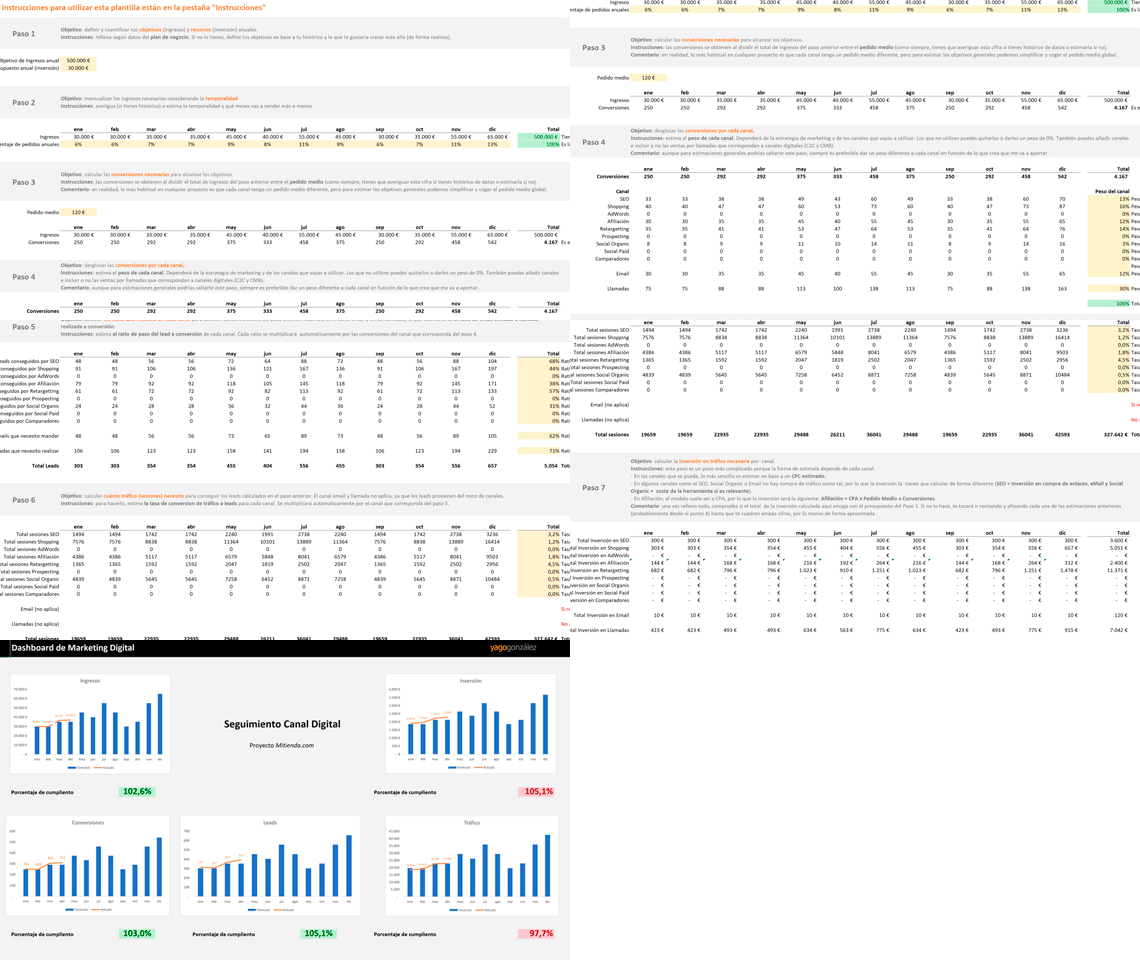
Before continuing: take a look at the marketing investment calculator
Planning the annual Marketing plan for an online store is a pain in the ass. Whether it's a new store or one with history.
And if you also have to make the budget fit the required investment, even more so.
That's why I use this template, where I enter a project's data and it returns the required investment with the numbers updated. Without having to change formulas and calculations.
It's not a bad way to get started with your ecommerce analytics.
And besides the calculator, you'll receive a trick or tip (a good one) in your inbox every day to improve your business or digital project.
And once you have the estimated P&L for your project, add a layer of reality:
- Set three scenarios: realistic, optimistic and pessimistic.
- Or multiply revenue by 0.6 and expenses by 1.4.
These numbers will probably be closer to what you actually encounter.
Step 6: feedback
Once the project has launched, even if you think otherwise, the Go To Market strategy is NOT over.
No, because it is essential to analyze performance and the reasons why it works or doesn't. That way you can improve it. Or change it. Or shut it down, straight away.
To do that properly, BEFORE launch you should already be clear about which tools you'll use to collect ratings and opinions.
Here are several options:
- Different customer-rating emails.
- Review platforms (Google Maps, Trustpilot…).
- Feedback from the customer service team.
- Social media.
- Ratings in the app stores (if I'm launching an app).
- Focus groups or panels (more expensive).
This feedback is what will guide you in the next iteration of your product or service, which is when its Go To Market phase will truly be over.
Final conclusions
You've made it to the end. Now you know quite a bit more about GTM and how useful it can be for any type of business.
I hope I've made you understand that Go To Market is, in principle, fairly logical. But just because it is logical doesn't mean it's always done well.
And many times it's the key that makes one product or service beat another very similar one. For example, the VHS video system over Betamax. The PlayStation over the Nintendo 64. Or WhatsApp over Telegram.
If you know all the steps and apply them to a good business idea, it's very likely to work out and you'll get customers. Whether it becomes successful or not will depend on your objectives, of course.
In any case, if the subject interests you, I recommend again that you carry on, for example by reading about Product Launch Formula or about Product-Led Growth and its rather particular approach to GTM.
It will help you understand what this strategy can bring you and why some launches succeed while others end in disaster.
And if, after analyzing it properly, you think you need help launching your (digital) project, tell me and we'll talk it through.

Leave a Reply