
There is no such thing as the best video game controller. Not as such, not for everything and everyone.
There is the best controller for a specific type of game, for a specific console, or even for a very specific way of playing.
A controller can be fantastic for shooters and pretty bad for fighting games.
Another can have a wonderful D-pad, but rather average analog sticks.
Another can be extremely weird and, even so, have changed the way we play forever.
That is why in this article I want to explain the best video game controllers I’ve used myself, chosen according to the type of game they really seem good for.
Because there are controllers I like for fighting games. Others for 3D games. And some I do not like at all, quite a few of them, and I’ll tell you about those too.
If you are thinking of buying a controller, maybe my experience after more than 35 years pressing buttons—it feels like yesterday when I started with the original Game Boy—will be useful.
What I value in a video game controller
Before starting the list, it is worth making clear what I look at when I talk about a good controller.
It is not enough for me that it looks nice, modern, or has lots of buttons and features. What matters is how it responds, how it feels in your hands, and whether it lets you play or forces you to fight with it.
D-pad
Yes, I know. It probably is not the first thing you look at. But for me, because of the games I like, the D-pad is still one of the most important parts of a controller.
In fighting games, 2D platformers, arcades, football games and retro emulation, a bad D-pad completely ruins the experience.
A poorly detected diagonal, a quarter-circle that does not come out, or an imprecise jump that gets you killed increases frustration and completely destroys the feeling of control that good games give you.
Analog stick
In 3D games, shooters, modern racing games or open-world adventures, the analog stick becomes the star.
Here I care a lot about position, travel, resistance and comfort. It is not just precision. It is also how your thumb lands after an hour of playing.
And whether it wears out over time, which, except in very specific cases, tends to happen.
Ergonomics
There are very pretty controllers that look well designed until you spend two hours playing with them.
Others, however, look strange or huge (ahem, Nintendo 64) and yet fit like a glove.
Real ergonomics are felt—or rather, not felt—when the controller “disappears” while you play. You do not notice it. It is there underneath, doing what it is supposed to do.
Durability
I am quite critical here.
I have Mega Drive controllers still fully working after an absurd number of years and hours.
Yes, it was different technology, but the durability of modern controllers is something that deserves a hard look.
It feels like you have to pay the toll of buying a new, expensive controller every X months or years.
Buttons and triggers
Personally, for some reason, bad plasticky buttons bother me less than a bad D-pad or analog stick.
I am fine as long as they are where they need to be. And triggers have to help, not get in the way. Not everything is better just because it is analog, longer or more modern.
There are games where a direct digital button works better than a trigger with travel and, as an example, WipEout Omega on the PS4: it is much better to put the brakes on R1 and L1 than on the analog triggers. At least if you want to improve your times.
Compatibility
A welcome extra.
If you buy a controller and it works with several consoles, PC, mobile, tablet, iOS, Android or Smart TV, then so much the better.
That said, there is an important nuance: however compatible a controller is, for some systems (N64, GameCube), I often prefer using the original controller with a good adapter rather than buying a modern clone that imitates the shape and works with everything, in exchange for working worse with everything too.
Battery
Another extra. If it has a battery, is wireless and the lag is not noticeable, then all the better than using AA batteries or a cable. But I insist, zero lag beats everything else.
So, after explaining my personal criteria for evaluating a controller, here is the list of the best ones.
#1. The best overall controller: DualShock 3
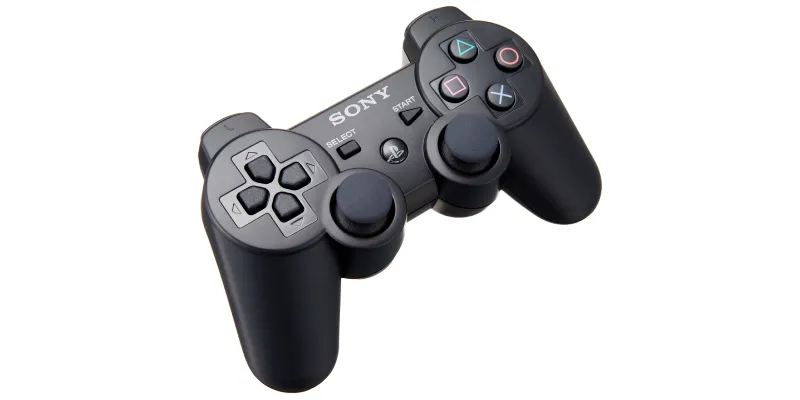
If I could only take one controller to a desert island to play every game in the world, I would choose the DualShock 3.
It was not perfect. In fact, it had fairly clear problems. But as a controller for almost everything, it seems to me one of the most balanced ever made.
It had a fairly decent D-pad, two convincing analog sticks, an integrated battery, familiar ergonomics, a button layout that worked for many genres and Bluetooth or cable connection depending on the occasion.
It was not the best controller for shooters, nor the best for fighting games, nor the best for racing, but it performed decently in any scenario.
The D-pad, the analog stick and classic football games
Part of the widespread preference for the classic PES games on PS2 over later ones and over eFootball I think comes precisely from there.
Playing with analog may seem like the natural evolution, yes. But it was not always necessary. In the old Pro games—and even in the modern ones—the D-pad made a lot of sense. It was direct, clear and predictable.
I am not saying those eight directions were more realistic, but in many cases they did offer more control. And perhaps it should have remained the default control method while the game did not realistically reward analog use.
The DualShock 3 kept that balance. You could play Pro with either formula. And you did it decently with both.
The worst thing about the DualShock 3
The big problem was the triggers and wear.
On PS2 and PS3 controllers it was relatively easy for the triggers to end up causing problems, jamming or requiring repair. I do not remember that problem being quite so marked on the original PlayStation controller, but of course, that one had other, much worse flaws.
The D-pad on the original PlayStation controller was brutally stiff (hello calluses and thumb pain “thanks” to Tekken 3). And on the first DualShock, the sticks aged so-so: they loosened and the protective rubber did not always withstand the passage of time well.
That is why the DualShock 3 seems to me the most balanced point in that classic family: it keeps the good parts, improves quite a lot on what came before and adds a battery.
The newer versions complicate things unnecessarily, at least for classic players like me.
That said, compatibility with other devices such as mobiles or PCs is better on version 4 than on version 3.
Practical guide: when I would use a DualShock 3
I would use it as an all-purpose controller for almost anything, as long as I did not have a better one for that specific thing.
It would not be my first choice for modern shooters, 3D games where the left stick is in constant use, competitive 2D fighting or retro games. Although, if there is no other option, it would not be the end of the world either.
#2. The best controller for 3D games and shooters: Xbox 360, Xbox One and Xbox Series
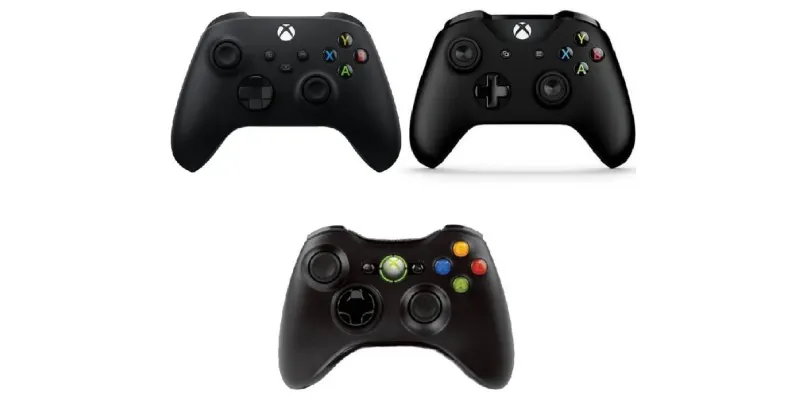
For 3D games, shooters, modern racing games and PC, I clearly prefer the design of the Xbox controller.
The key is the position of the left stick.
In most modern games, the main movement is on the analog stick. The D-pad is left for changing weapons, opening menus, selecting objects or secondary actions. That is why it makes more sense to me for the left stick to be at the top, right where the thumb naturally falls.
Besides, I find its design more comfortable in long sessions.
On the downside: most of them do not include batteries and you have to keep recharging AA batteries (not included).
Xbox 360: extremely comfortable, but with a horrible D-pad
The Xbox 360 controller was extremely comfortable for shooters, racing games, 3D adventures and, on top of that, 100% compatible with PC. For years it was, in fact, the controller that felt most natural for playing on a computer.
But it had one gigantic problem: the D-pad.
Great for shooters. Punishment for Street Fighter IV.
It was a controller designed for 3D.
Xbox One and Xbox Series: the same idea, better polished
Later Xbox controllers keep the same philosophy, but improve feel, finish and D-pad.
They do not radically change the idea because they did not need to. The base was good: left stick up top, comfortable grip, well-placed triggers and excellent PC compatibility.
If I want to play something modern with analog, I almost always pick up the Xbox controller before the PlayStation one.
WipEout HD with an Xbox 360 controller on PS3
Even for PlayStation games. For example, WipEout HD.
I played it on PS3 with an adapter to use the Xbox 360 controller. And it played better.
Not because the PS3 controller was bad, but because for that type of game the analog stick on the Xbox controller felt more comfortable and precise to me.
Practical guide: when I would use an Xbox controller
I would use it for shooters, modern racing games, open-world games, third-person action, PC and current games in general.
I would not use it as my first choice for 2D fighting, platformers where you depend heavily on the D-pad, or pure 8- and 16-bit retro. The D-pad from Xbox One onwards is acceptable, maybe at the level of a Super Nintendo controller, but that one was not exactly the cure for all ills either.
#3. The best controller for fighting and 2D games: Mad Catz Street Fighter IV FightPad
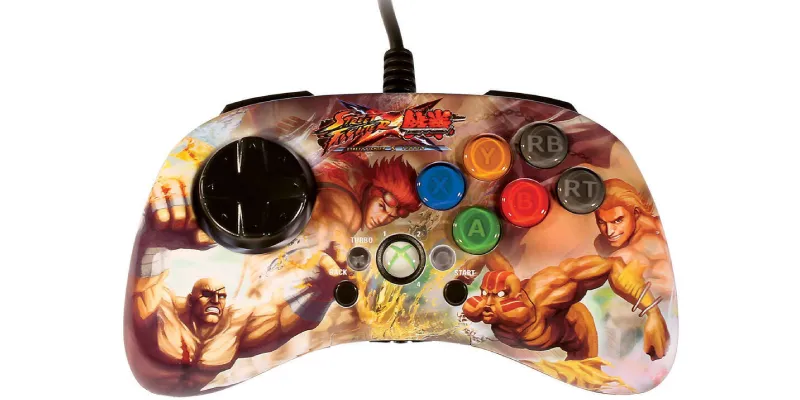
For fighting games and, in general, for everything you truly play with a D-pad, my choice is the Mad Catz Street Fighter IV FightPad.
This controller copied the Sega Saturn pad format, with its six front buttons, two triggers and a floating D-pad, a setup clearly designed for fighting games.
The controller that fixed Street Fighter IV for me
Winning online in Street Fighter IV with the original Xbox 360 controller was impossible.
Not because of the game. Or the network connection. It was because the controller was not designed for that.
I had to buy the Mad Catz FightPad to be able to compete and the difference was immediate: I stopped fighting the controller and started fighting the opponent, which was the whole point.
Why its D-pad was so good
The D-pad was large, comfortable and very precise for diagonals, quarter-circles and fast movements. If the move did not come out, it was your fault.
Also, the six-button face layout brought it much closer to Capcom arcades and suited SNK games well. Perhaps Tekken was where things felt a little more awkward, but it was a matter of getting used to it.
Not just fighting: everything played with a D-pad
Although I am strongly associating it with Street Fighter (in fact, the one I have is a special SF IV edition), do not limit it to fighting games.
It is an excellent controller for 2D platformers, beat’em ups, run and gun games, arcades, Neo Geo games, CPS, Mega Drive, Super Nintendo and retro emulation in general.
Anything that depends on a good D-pad plays brilliantly with this controller.
Honorable mentions: the Mega Drive and Sega Saturn pads
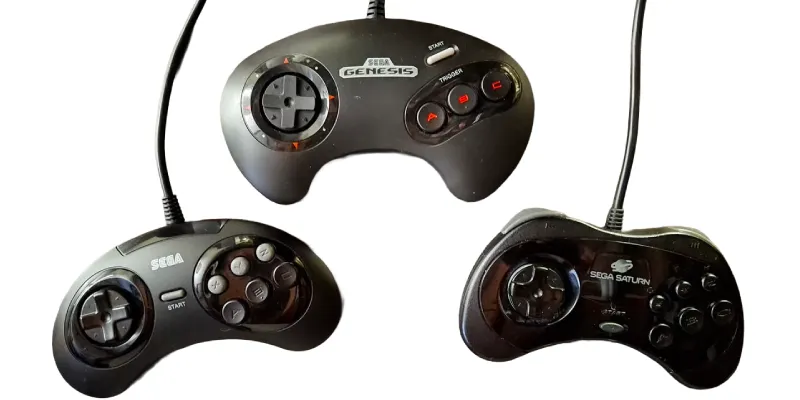
Sega knew how to make 2D D-pads.
The Mega Drive one was already very good, especially on the six-button controller. And the Sega Saturn one also deserves a mention: precise, comfortable and far superior to many later D-pads.
In fact, when we talk about 2D games, old Sega controllers often remain the benchmark. And for good reason.
Obviously, the FightPad’s advantage is that it is more modern and you do not need adapters to play with it. Although you may need to make certain adjustments to play in the browser with it.
Practical guide: when I would use a FightPad
I would use it for Street Fighter, King of Fighters, Garou, Metal Slug, 2D platformers, beat’em ups, arcades and retro emulation.
I would not use it for shooters or 3D games based on an analog stick. Not even as a joke.
As alternatives, I would look at 8BitDo controllers or, using an adapter, six-button Mega Drive or Sega Saturn controllers, or directly an arcade stick if you are into sticks.
#4. The best controller on a handheld console: Neo Geo Pocket
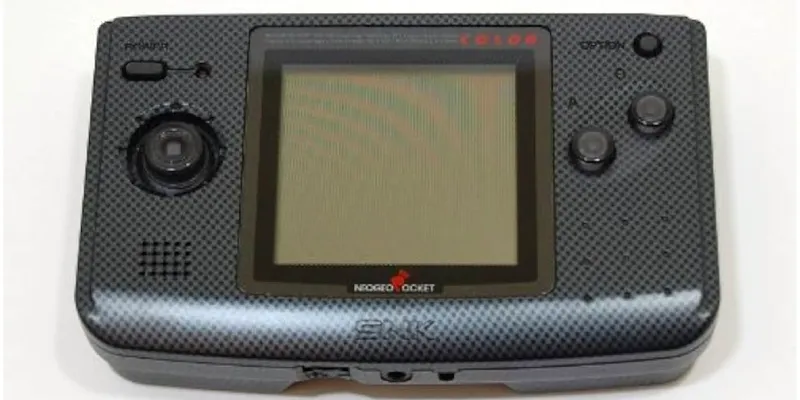
The best pad I have tried on a handheld console is the one on the Neo Geo Pocket. In a close fight with the FightPad for the best overall “D-pad”.
And its tiny stick was not a modern analog stick, but a digital one with micro-switches, flat, precise and extremely fast.
Playing KOF on it was AN ABSOLUTE JOY.
The perfect joystick for a handheld
The great thing about the Neo Geo Pocket control was also that it did not stick out from the console itself. In other words, it was recessed, so it did not snag on anything when you carried it around, reducing the chance of breakage.
It was not fragile and gave a fantastic feeling of precision. It was perfect for fighting games, arcades and 2D. It had that dry, clear click that told you exactly which direction you were pressing.
Arcade precision in a handheld console
SNK understood something many handhelds forgot: if you are going to play 2D games, the control cannot be decoration.
You can have a good screen, a good catalogue and a good battery, but if the D-pad or stick does not respond well, everything falls apart.
Neo Geo Pocket conveyed a feeling of control very close to arcade on a tiny console, and that is something that has never, ever been repeated. On no other handheld, not even the PSP, whose D-pad was actually quite nice.
The modern handheld I wish existed
I want a modern handheld with the same type of control as the Neo Geo Pocket.
I would pay a lot for something like that.
I do not want a patchable D-pad like the R36S one. I do not want an analog stick that sort of works. I want that precise, flat, fast click, perfect for 2D games.
That is why some current retro handhelds annoy me so much. They can be fantastic machines for price, power or catalogue, but if the D-pad fails, everything else is secondary.
Practical guide: when I would use a control like the Neo Geo Pocket’s
I would use it for portable fighting games, arcades, 2D platformers, retro action.
I would not use it for modern 3D games or systems designed around an analog stick.
As a current partial alternative, I am very interested in the 8BitDo NEOGEO Wireless Controller, because it is an officially licensed SNK controller and a remake of the Neo Geo CD micro-switch joystick, although obviously it does not solve the dream of a modern handheld with that control built in.
I will talk a little more about it later.
#5. The best controller for mobile or tablet: a console controller with a grip
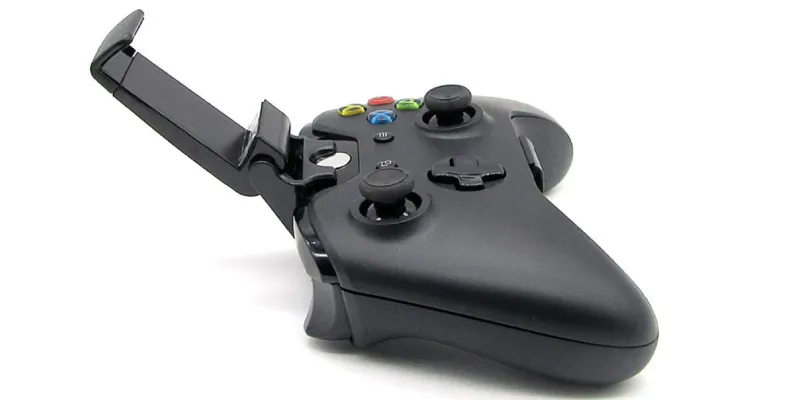
For playing on mobile or tablet, I often prefer an unglamorous but very good solution: a console controller with a grip.
Better a good controller with a grip than a mediocre telescopic one
If you already have a PlayStation or Xbox controller at home, you often do not need to buy a Razer Kishi or a cheap telescopic controller from iPega (I have had several).
A telescopic controller looks great in the photo. It snaps on beautifully and seems to turn the mobile into a real handheld console.
The problem is that many have worse D-pads, worse sticks and a much inferior feel than a real console controller. Especially if we are talking about cheap Chinese controllers, which are the ones flooding the market.
The Kishi is much better in this respect, but it costs money. So if you already have any controller you like, one of these clips costs between €3 and €5 and is a fantastic investment.
The experience improves enormously when you stop touching glass and start playing with real buttons, D-pad and sticks. The phone stops being a quick fix and becomes quite a serious system.
Playing Vampire Survivors with the touchscreen has NOTHING to do with playing it with the Xbox analog stick. Try it and tell me. But careful, because you may end up as hooked as I am on a little game that does not even require you to press buttons.
PlayStation if you prioritize the D-pad
If you are going to play retro, 2D platformers, fighting games or emulation where the D-pad matters, I would go first for a PlayStation controller if you have one, or an 8BitDo with a good D-pad (for example, the Neo Geo one I mention a bit further down).
From the DualShock 3 onwards they also have the advantage of a battery, although today they may be less convenient to connect than more modern controllers.
Xbox if you prioritize analog
If you are going to play cloud games, shooters, racing, 3D adventures or modern titles, I would choose Xbox.
There, the position of the left stick wins.
Practical guide: which controller I would use on mobile or tablet
For 2D and retro, PlayStation or 8BitDo.
For 3D, cloud and shooters, Xbox.
To save money, I would use the controller you already have and buy a grip. I would avoid cheap telescopic controllers if what you want is precision. And if money is no issue, then yes, a Razer Kishi (v2 or v3) makes sense.
#6. The best modern controllers for retro: 8BitDo
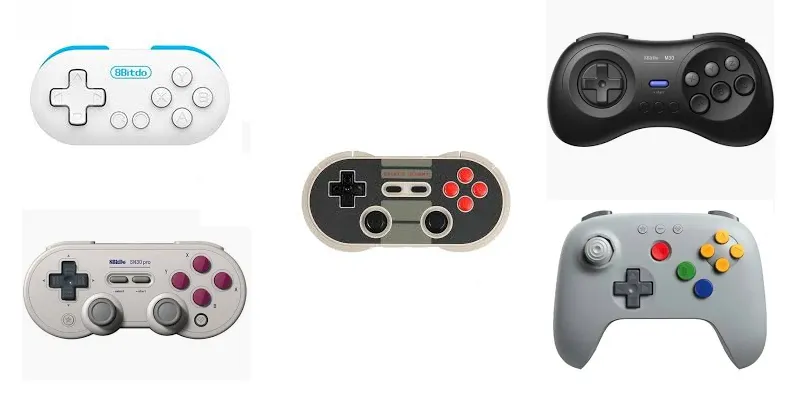
I want to highlight 8BitDo because it has understood quite well what someone who plays retro today needs.
You need a good D-pad, decent buttons, compatibility and that touch of nostalgia in the design that makes you fall in love at first sight.
They solve all of this well across their many models.
Why 8BitDo over others
I have had several 8BitDo controllers and, in general, they are quite reliable.
Even some small models, almost keychain-sized, let you play 2D games fairly decently. I still remember an AVE Madrid-Málaga trip with my brother and me beating each other up in Street Fighter IV with the original version (8BitDo Zero, plain and simple) of these mini controllers.
They are not ideal controllers for everything—nothing 3D with them—but they are a very practical option for PC, mobile, emulation and modern retro devices.
8BitDo NEOGEO Wireless Controller
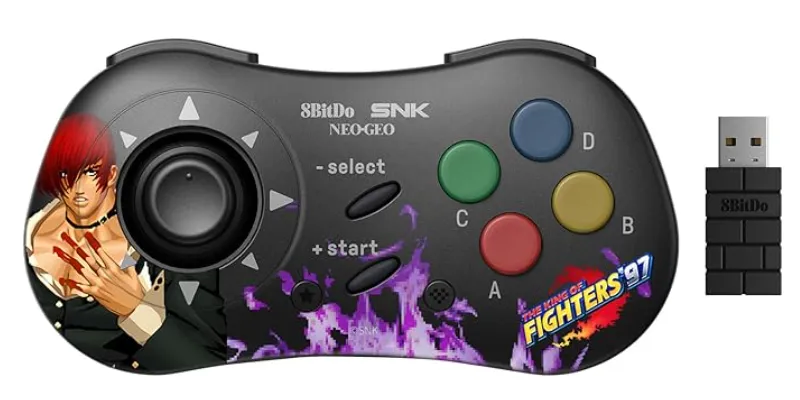
The model that interests me most right now is the 8BitDo NEOGEO Wireless Controller.
Not because it will replace my wish for a Neo Geo Pocket-style handheld, but because it brings back the micro-switch feel for 2D and arcade games.
Not everyone needs something like this. In fact, I do not even need it myself, because I have more than enough controllers. But if you miss that precise SNK click, you will do as I do and ask for it for your next birthday.
8BitDo 64 Controller and Nintendo 64
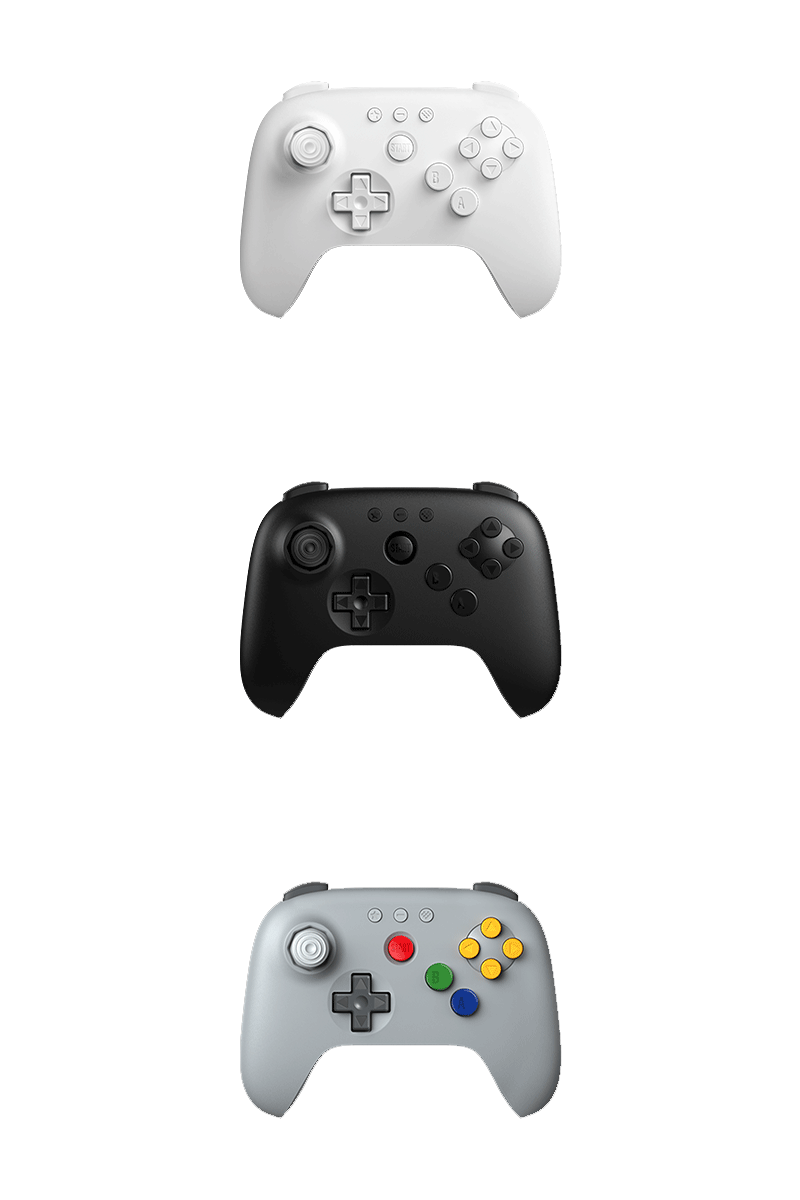
It is also worth mentioning the 8BitDo 64 Controller, because Nintendo 64 is a very special case.
8BitDo presents it as a controller that recovers the N64 layout in a more ergonomic body, with a Hall Effect joystick and compatibility with current systems such as Windows and Android, among others.
And this controller matters because emulating Nintendo 64 without a similar controller can be quite uncomfortable. If you have tried playing Star Fox 64 and doing loops, you will have noticed.
Many N64 games were designed around its somewhat strange layout. If you play with a normal modern controller, you can do it, of course. It is a matter of mapping controls and getting used to it. But often you are mentally translating controls instead of enjoying the game.
I said it before: a great controller is the one you forget is underneath.
When you do not need a new controller: adapters for original controllers
In any case, there are times when you do not need a new controller.
Because, in emulation, while 8BitDo will not disappoint you, it often means spending more than you need.
Simply getting an adapter from the original controller to USB to connect it to the PC is more than enough. And, of course, a much better solution than a modern Chinese clone.
What I am saying is especially valid for consoles like Nintendo 64 and its particular design, or PlayStation 2 if you still have the wired controllers.
Practical guide: when I would use 8BitDo or adapters
For 8 and 16 bits, I would use 8BitDo, Mega Drive, Saturn or Mad Catz FightPad.
For Nintendo 64, original controller with adapter or a modern controller with a specific layout.
For classic PlayStation, DualShock 2, DualShock 3 or original controller with adapter.
For general retro PC, I would choose according to the system I am going to emulate, but any of the previous solutions works.
#7. The most important controller in console history: Nintendo 64
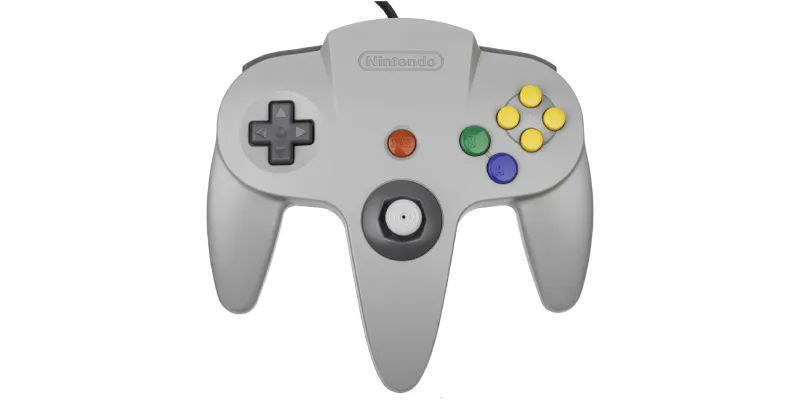
It is clear that the Nintendo 64 controller is not the one I would recommend today for playing almost anything, but it does seem to me one of the most important controllers in history. Or the most important.
It was not the first device with analog control, but it was the controller that made the analog stick central to 3D console gaming.
A weird controller for a weird era
The design was strange: three grips, central stick, C buttons, Z trigger… A design that today, 30 years later, still looks Martian.
But you have to understand the context. At that time, people were inventing how to control 3D games on console. There was nothing even remotely like Mario 64 and the Nintendo 64 controller fitted the game like a glove.
It was such a revolution that Sony, the company with the futuristic console, was quick to release its DualShock controllers—quite inferior at the time—in response.
The analog stick and the Z trigger
Without that controller, games like the aforementioned Super Mario 64 or Zelda: Ocarina of Time and the enemy lock-on button would not be what they are.
The stick allowed movement to be controlled with a precision the D-pad could not provide. And the Z trigger, placed underneath, had a very clear logic for certain games, such as shooters. In fact, even today, I still find it more comfortable to shoot in GoldenEye with this button than with Xbox triggers.
The C buttons also made sense for 3D as camera movement, but they were quickly replaced by a second analog stick on later consoles.
It was not a comfortable controller for everything and its D-pad was passable at most. But for that transition to 3D, it was decisive.
GoldenEye with control setup 2
Let’s talk a little more about my favorite example: GoldenEye.
With control setup 2, moving with the C buttons and leaving the joystick for the camera, it was excellent. You moved at full speed and aimed manually much better than with the normal control method.
With this—and without being a god at the game—you could get the achievement of beating the second level (Facility) in 00 Agent in under 2:42, and thus unlock Invincibility.
The controller was weird, but it allowed control solutions that had previously been unthinkable. For the first time it made sense to play shooters on console and not only on PC with mouse and keyboard.
Practical guide: when I would use a Nintendo 64 controller
I would use it for original Nintendo 64 and for N64 emulation with an adapter or specific controller.
I really would not use it for anything else.
If you are going to emulate N64, I would try to use an original controller with a USB adapter or the 8BitDo controller.
Controllers that did not convince me
Not all the controllers I have used left me with good memories.
Some are good controllers, but not for what I wanted. Others have a huge reputation, but seem overrated to me in certain genres. And others simply have clear problems, despite their fame.
Super Nintendo for fighting games
I am not saying the Super Nintendo controller is bad.
It is historic, comfortable and perfect for many games such as Super Mario. But for fighting games it has never convinced me as much as Sega controllers.
For platformers, RPGs or 2D adventures, perfect. For Street Fighter and games with fast quarter-circles, I much prefer the Mega Drive one.
Nintendo DS
The Nintendo DS D-pad seems mediocre to me, especially the one on the DS Lite, although better than the Super Nintendo one for fighting.
For RPGs, adventures and games where extreme precision is not so important, it does the job. For fighting or demanding platformers, it does not seem ideal to me.
PlayStation 1 and original DualShock
The original PlayStation D-pad was so-so for Tekken, Pro and fighting games. Your thumb suffered in long sessions.
On the original DualShock, the sticks also loosened and lost the protective rubber fairly soon.
It was an important controller and its durability is legendary, but as a controller for playing today, DualShock 2 and later are much better.
R36S
The R36S is wonderful for what it costs, but its D-pad is its big problem.
Even improving it, I end up playing fighting games with the analog stick. And that, in 2D fighting games, is not ideal.
It has four triggers, which sounds very good on paper, but they are not comfortable either. They are there, they work, but the inner ones are too hard to use well.
For RPGs and many retro games, it works perfectly well. For combos, jumps and real D-pad precision, it falls short. And that is a pity.
Steam Deck
Steam Deck is a fantastic machine, but not because of its controls.
The D-pad is acceptable. The sticks too. I understand that the trackpads are useful for PC games that require a mouse, but in my case they get in the way more than they help (they make the console wider than I would like).
As a portable PC machine it seems extraordinary to me. Its controls do not seem especially brilliant.
Cheap telescopic controllers
Cheap telescopic controllers look like the ideal solution for mobile.
They fit the phone in the middle, remain compact and give the impression of a handheld console. But when it comes to playing, they feel and perform worse than a real controller with a grip.
If the D-pad and sticks are bad, it does not matter how neatly integrated the mobile looks.
GameCube
The GameCube controller always seemed more curious than successful to me.
It was like raising the idea of the Nintendo 64 controller to the nth degree: weird, very much its own thing, not necessarily bad, but not especially remarkable beyond its design either.
For GameCube and games designed around it, it makes sense. As a general controller for other tasks, it never won me over.
Wii
Let’s say the idea was good. Or very good. It attracted thousands of people who had never touched a console before.
But that does not mean it was good.
Innovative, yes.
Good… not so much.
And although pointing at the screen as if with the TV remote and controlling movements simply by waving it in the air looked like magic, the reality is that it was very imprecise. So much so that they had to improve it.
Besides, the D-pad was a mess. And the 2 + 1 buttons as well.
If you were a hardcore player, you had to buy separately the Pro controller, which really is one of Nintendo’s best controllers. Playing Mario Kart with the official Wii controller (with or without wheel) and playing it with the Pro controller was night and day. A bit like what I was saying before about PES and the shift between D-pad and analog, but even more pronounced.
I will not miss it. And yet I still have to use it to start whenever I want to play a round of my beloved F-Zero X from GameCube on the Wii.
That said, the Resident Evil and House of the Dead gun games (aiming with the controller inside the plastic gun) were a lot of fun if you played them with company.
Controllers I have not tried enough
I have used all the previous controllers for many hours / days / years. However, there are famous controllers I have not used, so I cannot judge them.
Examples:
- Xbox Elite.
- DualSense Edge.
- Hori Fighting Commander.
- Current premium arcade sticks.
This article is about controllers that have passed through my hands during hours of real play. That is why I can defend some and criticize others without relying on generalities.
Practical guide: which controller I would choose for each type of game
If I had to summarize the whole article in practical terms, I would sum it up like this.
Best controller for fighting games
Mad Catz Street Fighter IV FightPad.
As alternatives, I would look at an 8BitDo model aimed at 2D (like the Neo Geo one), a six-button Mega Drive or Sega Saturn with adapter (no Chinese clones), or an arcade stick.
I would avoid the original Xbox 360 D-pad, the R36S and any controller where diagonals do not come out cleanly.
Best controller for 2D platformers
Again, I would choose Mad Catz FightPad, Sega Saturn, Mega Drive or 8BitDo.
On handheld, the ideal reference remains Neo Geo Pocket.
Best controller for shooters and 3D games
Xbox One or Xbox Series.
The Xbox 360 controller also seems very comfortable to me for this, although its D-pad limits it a lot outside 3D games and it is wired.
Best controller for racing games
Also Xbox.
I already mentioned that even in PlayStation games like WipEout HD, my experience with the Xbox 360 controller on PS3 was better than with the console’s official controller.
Best controller for football games
For classic PES and Pro, I choose DualShock 2 or DualShock 3.
For modern eFootball , analog is the natural evolution and there we are talking about Xbox, but it does not always improve the quality of control.
Best controller for retro and emulation
For 8 and 16 bits: Mad Catz FightPad, 8BitDo, Mega Drive, Saturn with adapter.
For PlayStation: DualShock 2 or DualShock 3.
For Nintendo 64: original controller with adapter or the 8BitDo one.
For arcade and fighting: FightPad.
Best controller for mobile or tablet
I would use a console controller with a grip.
PlayStation or 8BitDo if you prioritize the D-pad. Xbox if you prioritize analog.
And I would only buy a telescopic controller if I were sure that the specific model has a good D-pad, good sticks and minimal lag.
Conclusions: the best controller depends on the game
The perfect controller does not exist.
But I do want you to keep several ideas:
- Depending on your type of use (retro, 2D, fighting), a good D-pad matters more than it seems.
- Analog changed 3D games.
- Some old controllers had a build quality that is missed today.
- And for emulation, it is often better to use an original controller with an adapter than a modern clone that only copies the shape.
- For me, the DualShock 3 is the best all-purpose controller.
- Xbox wins in 3D games and shooters.
- The Mad Catz FightPad is my favorite for fighting and 2D games.
- Neo Geo Pocket remains the handheld reference I miss the most.
- And the Nintendo 64 controller changed the way we play on console.
In the end, you can have the most powerful console, the best-configured emulator or the most mythical game from your childhood, but be clear about one thing: if the controller does not respond as it should, the experience breaks on the first jumping hadoken or the first corner where you run wide from oversteer.
I hope this guide helps you see how to avoid that.
Frequently asked questions
Sure. I’ll make them shorter:
Recommended FAQs
What is the best overall video game controller?
For me, the best classic overall controller is the DualShock 3. It is not the best at everything, but it balances D-pad, analog sticks, ergonomics and battery very well.
What is the best controller for fighting games?
The Mad Catz Street Fighter IV FightPad. Its D-pad and six front buttons make it ideal for Street Fighter, King of Fighters, Garou and other fighting games.
What is the best controller for 2D and retro games?
For 2D and retro games I would choose Mad Catz FightPad, Mega Drive, Sega Saturn or a good 8BitDo. What matters here is a precise D-pad.
What is the best controller for shooters and 3D games?
Xbox controllers, especially Xbox One or Xbox Series. I find the position of the left stick more comfortable for shooters, racing and 3D games.
Which controller is best for playing on mobile or tablet?
A console controller with a grip. PlayStation or 8BitDo if you want a good D-pad; Xbox if you are going to play cloud, shooters or 3D games.
Is a telescopic controller for mobile worth it?
Only if the specific model has a good D-pad and good sticks. In many cases I prefer a real controller with a grip, even if it looks less integrated.
What is the best controller for emulation?
It depends on the system. For 8/16 bits, FightPad, Mega Drive, Saturn or 8BitDo. For PlayStation, DualShock 2/3. For Nintendo 64, original controller with adapter.
Why is the Nintendo 64 controller important?
Because it helped turn the analog stick into the center of 3D video games on console. Its design was weird, but it was key to understanding the leap to 3D.

Leave a Reply