
The Boys is not better than the comic it is based on. It is different.
And this, which sounds obvious, I think needs saying because for years people have repeated the idea that Prime Video’s series improved the original material byGarth Ennis and Darick Robertson. I do not see it that way.
Quick take on the series
The series is more accessible, more televisual, more political and, at its best, makes better use of some characters. But the comic has something the series gradually loses: a better-threaded plot.
In the comic, the story moves forward because it has to. In the series, too often, it feels as if the plot exists to justify the next over-the-top scene.
I do not mean that as a total condemnation. Part of the appeal of The Boys is precisely that: making an adult superhero series without sweetening the violence, sex or mean streak. But one thing is for excess to be part of its identity, and another for it to end up replacing the story.
And speaking of history, The Boys is a landmark series: people will still talk about it decades from now, but for some of its isolated scenes more than for the whole.
What The Boys is about
The Boys starts from a very simple idea: what would happen if superheroes existed, but instead of being noble, selfless figures, they were products of a huge corporation?
In that world, Vought —the megacorporation—sells the supes as celebrities, political icons and public saviors, while covering up their abuses, crimes and private misery.
Hughie the main protagonist, falls into that hole after personally suffering the consequences of that impunity, and ends up joining Butcher and his group to try to expose the truth.
From there, the series pits The Boys against The Seven, with Homelander as the great figure of power: a false Superman turned narcissistic, unstable and increasingly dangerous leader.
The story grows into corporate conspiracies, political violence, experiments, family trauma and an increasingly open war against the supes.
Deep down, it is not an especially complex plot: it is a story about power, revenge and corruption. The thing is that The Boys wraps it in so much violence, satire, grotesque sex and narrative detours that it often seems more convoluted than it really is.
What works, what does not, and where it loses itself
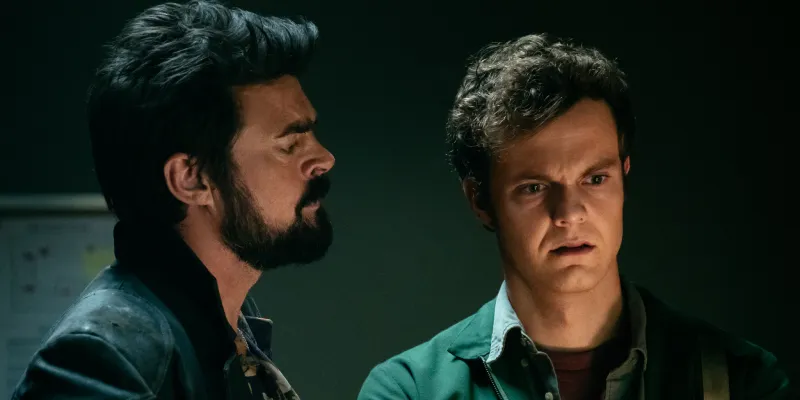
The series starts very strongly. Especially in the first season and, to a lesser extent, the second.
There, the script, the characters and the plot all move in the same direction: Hughie makes sense. Butcher has purpose. Homelander is a constant threat. Vought works as a critique of corporate power and the most cynical marketing. And The Seven are a fairly clever distortion of the superhero imagery we all carry in our heads.
In that initial stretch, the series does not seem interested only in shocking you; it wants to tell something. That is why it works so well.
The problem is that, as the seasons move on, that clarity dissolves and the need to outdo the brutality of the previous scene starts to weigh more than building a solid story. And that is when The Boys begins to be seen and remembered more for its scenes than for its overall value.
Herogasm seems more important to me for what it meant than for what it contributes narratively. Nothing like it had aired on mainstream television, and that has merit. But as a story block, it is overrated.
By contrast, the thing with The Deep and the octopus is much better: it is ridiculous, uncomfortable and, at the same time, perfectly defines a miserable character who is always looking for a new way to sink a little further.
And the same goes for Terror dreaming about Homelander. It is madness, yes. But it has that specific nasty edge that makes The Boys The Boys.
But then there are tons, really tons, of totally unnecessary violent or sexual scenes that are clearly inflated by the noise they generate.
At first, the series uses excess to tell something, but as the plot moves forward and the surprise wears off,it starts overusing this kind of device just so people will talk about the episode on Instagram. And that is exactly what happens from season 3 onward.
It is not that the series suddenly becomes bad; it is a gradual process in which that feeling that everything that happens matters is lost. You start not caring about certain things you are watching because, really, they do not matter.
In season 4 the series hits bottom: too many plots, too many turns, too much sense that something is being stretched when it did not need to be.
To my taste, season 5 recovers very slightly because it already has to close, although critics in general point to it as the weakest of the whole series. Personally, perhaps because I wanted to see the ending, I watched the episodes with more interest than the previous season.
The point is that the problem is not that The Boys is long, but that it becomes overstretched and flat:
- There is a virus that turns humans into supes.
- Another that wipes out supes.
- Another virus that makes them immortal.
- There is Soldier Boy, whose real relevance remains up in the air.
- And Homelander’s son.
- Queen Maeve, Stormfront, Firecracker and Sage are around.
- Of course, Black Noir is there in a much less relevant role than in the comic.
- There is Kimiko, who speaks or does not speak depending on what suits the plot.
- Or Victoria Neuman.
- Not to mention A-Train and the rest of The Seven.
- There is Homelander’s church.
Homelander and why The Boys is worth recommending
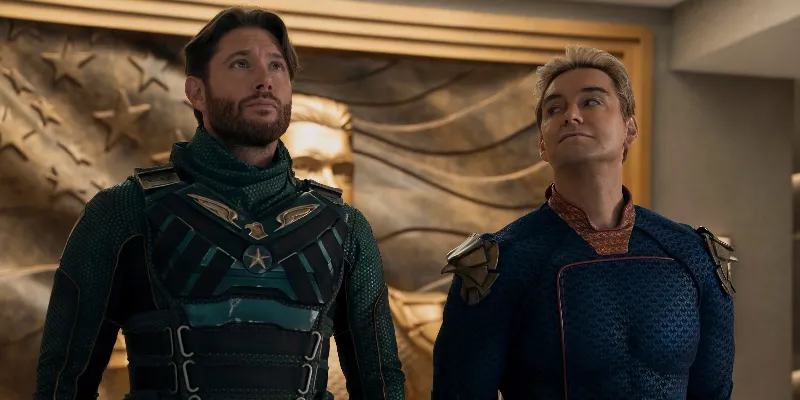
And I could go on, because there are many ideas, but few end up being developed with the strength they promised. In fact, many of these characters’ arcs seem incomplete.
But if there is one thing The Boys keeps until the end, it is Homelander.
Antony Starr is spectacular. But it is not just the performance. It is the mix of threat, ridiculous fragility, narcissism and need for approval. Homelander can be scary and pitiable in the same scene. He can seem like a broken child and, two seconds later, someone capable of tearing through a room because someone looked at him wrong.
That point where you do not know whether he is going to congratulate someone or split them in two is one of the series’ great successes. And it does not wear out. When Homelander appears, everything feels more dangerous and attractive.
With something similar happens with Billy Butcher. It is also a very charismatic role, but honestly I think Homelander offers more.
Even with them, The Boysis not essential viewing for everyone. But it is important. Especially because it has brought extreme violence into the mainstream.
We are not talking about an oddity from a small platform or a cult series watched by four people. We are talking about a huge Prime Video production making a wild, uncomfortable superhero series that is not exactly kind to the viewer.
That has changed things. It has shown there is a market for a superhero series with this level of production quality and this much brutality. It worked, perhaps precisely because of that.
From here on, spoilers for the ending of The Boys
Up to here, you can read without being spoiled too much. From here on, no.
I will tell you my thoughts on the series finale.
Homelander’s ending promised more
Homelander’s ending stays halfway.
I like the idea of him losing his powers. In fact, the scene where he tries to fly by hopping is very good: ridiculous, humiliating and very The Boys. The false god turned into a pathetic guy who cannot get off the ground. There is a powerful image there.
The problem is that his closure ends up neither fully epic nor fully ridiculous. It stays in the middle. After five seasons building Homelander as an almost mythological threat, I expected something bigger.
Not necessarily fairer or more elegant. But more forceful. The series could have killed him brutally or epically. Or reduced him to absolute ridicule. Either option would have worked. The ending it chooses feels slight.
Butcher deserved a dirtier ending
With all that, the death that works worst for me is Butcher’s.
Not so much because it is not the same as in the comic—it is similar enough—but because the series does not dare take the virus plan all the way.
The Boys had spent years building a story about hatred, revenge, fanaticism and monsters fighting monsters. In that context, for Butcher to release the virus and wipe out all the supes would have been much more coherent. Less commercial, of course. But more in line with what the series had always promised. And braver.
In fact, I think this ending makes much more sense:
Butcher releases the virus, killing Starlight among others. Because of that, and as revenge, Hughie has to kill him.
That ending would have forced the series to accept that it is not a typical story of good guys and bad guys, but one of grays and nasty edges. What it had always sold itself as. In fact, The Boys has often played at being the series that does not hold back, but at the end, it does.
Why I prefer the comic’s ending
What I prefer most in the comic is Black Noir’s surprise.
I am not going to reveal Black Noir’s twist, because it is worth discovering while reading, but I will say I did not see it coming. And that is exactly what I miss in the series: a final surprise that really hits you.
The comic is cruder, wilder and more uneven in other ways. But its ending is more coherent and has a nasty streak the series never quite matches. The adaptation is more televisual, more commercial and more comfortable for a broad audience. That is, more domesticated.
Final verdict
The Boys is not a perfect series, but it is a turning point in television.
It is a superproduction with brilliant moments, an extraordinary villain and several scenes that are already part of recent TV history. But it also has too many underdeveloped ideas and an ending that, given what it promised, feels too clean.
I repeat that, for me, it does not surpass the comic, but it did not have to. It is something else: a landmark, uneven, excessive series, and less rounded than people will probably say over time.
But also a series that has made us enjoy something that, in the future, may be forbidden. And having been part of that is cool.
Technical sheet
| Field | Data |
| Title | The Boys |
| Years | 2019-2026 |
| Seasons | 5 |
| Episodes | 40 |
| Creator / showrunner | Eric Kripke |
| Based on | The comic by Garth Ennis and Darick Robertson |
| Main cast | Karl Urban, Jack Quaid, Antony Starr, Erin Moriarty, Laz Alonso, Tomer Capone, Karen Fukuhara, Chace Crawford and Jessie T. Usher |
| Genre | Action, black comedy and superhero satire |
| Country | United States |
| Available on | Prime Video |
Rating
Who it is for
✔️ If you are a superhero fan and want to see a brutal, adult, distorted version of the genre.✔️ If you are looking for a wild, uncomfortable and unusual series within the mainstream.
✔️ If you enjoy great villains.
Who it is not for
❌ For squeamish viewers.❌ For anyone who cannot read irony.
❌ For anyone looking for very tightly woven plots and scripts.
❌ For anyone who only wants polished, elegant works or works praised by critics in the classic sense.
Frequently asked questions
Is The Boys better than the comic?
No. It is different. The series gains in television reach, political satire and early character work. The comic wins in brutality, surprise and sense of plot.
Is it worth watching all of The Boys?
Yes, but not for everyone. It is worth it if you like superheroes, extreme violence and series that play with excess.
Does the ending of The Boys live up to expectations?
Partly. It closes the story, but Homelander’s ending and, above all, Butcher’s feel less epic and less dirty than the series seemed to promise.
Where can you watch The Boys?
The Boys is available on Prime Video.
How many seasons does The Boys have?
The Boys has five seasons.

Leave a Reply