
I read From Hell, the comic by Alan Moore and Eddie Campbell, about twenty years ago. Obviously, I don't remember every detail, but I do remember the London Campbell drew: a dirty, damp, miserable city, deeply divided along class lines.
The film by the Hughes brothers, starring Johnny Depp, captures that feeling remarkably well on screen. The problem is that, while the comic used the crimes of Jack the Ripper to tell a far more ambitious story, this adaptation ends up as a conventional thriller. Entertaining, yes, but with little personality.
A Victorian London you can believe in
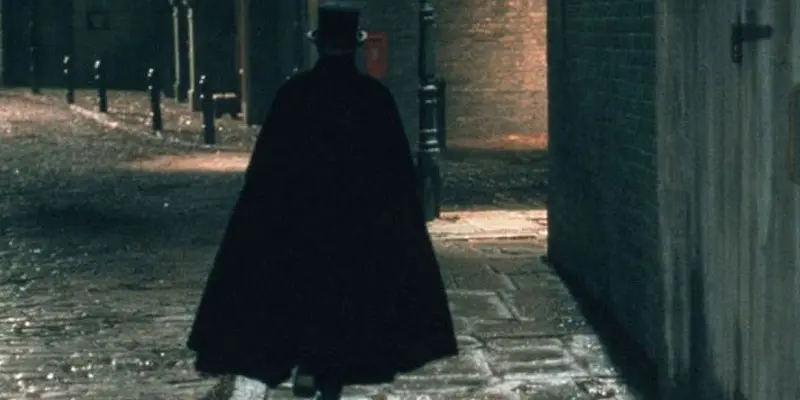
The atmosphere is the best thing about From Hell. Whitechapel's streets look permanently wet, its establishments are full of smoke and grime, and poor people's homes contrast sharply with the places frequented by the privileged. It's the kind of setting where you can almost feel the cold and damp.
That inequality also shows in the way the characters dress, speak and live. The cinematography and production design work wonderfully together to make the London of 1888 believable.
It reminded me of what Eddie Campbell achieved with his drawings, although through different means. The comic's black and white artwork was harsh, sometimes downright grimy. The film is far more visually striking, but retains the oppressive atmosphere that suited the story so well.
An appealing plot that ends up feeling formulaic
On paper, the combination sounds fantastic: Jack the Ripper, a conspiracy involving the British royal family, Freemasonry and a detective who has visions of the murders. All the ingredients for a really good thriller.
Too bad it doesn't turn out that way.
There are scenes that grab your attention. The investigation keeps you interested, and the mystery has a few noteworthy moments. But the problem is that, as the film goes on, it increasingly falls back on overly familiar devices: clues, suspects, revelations and a very artificial romantic subplot that adds little emotion.
It's not a boring film, but it doesn't surprise you either. There are good ideas in the premise—as you'd expect when adapting such a work of art—but what I miss is a more original way of developing them.
What changes from Alan Moore's comic
A lot. Too much. And I say that knowing the original work is extremely difficult to turn into a film, given its ambition and length. Still, they could have come a little closer.
In the graphic novel, the investigation wasn't the most important thing. Moore used the murders to explore Victorian society, the connections between power and violence, London's architecture and esoteric beliefs of the period.
He also devoted far more space to the motivations and mindsets of the characters involved in the conspiracy. The result was a dense, strange and deeply disturbing story that went far beyond discovering who was killing those women. In fact, you knew almost from the beginning.
The Hughes brothers take an easier route. They make the murderer's identity the heart of the mystery and put Inspector Abberline, played by Johnny Depp, centre stage. His visions bring a supernatural element that fits the film, though they also make the investigation depend on a rather convenient device for the screenplay.
I understand that a two-hour film can't include everything Moore covered. But by simplifying the material so much, it also loses much of what made it interesting.
Mary Kelly and a love story that undermines credibility
Another major change is the romance between Abberline and Mary Kelly, played by Heather Graham. It didn't carry that weight in the comic and, in the film, it isn't developed enough to be believable either.
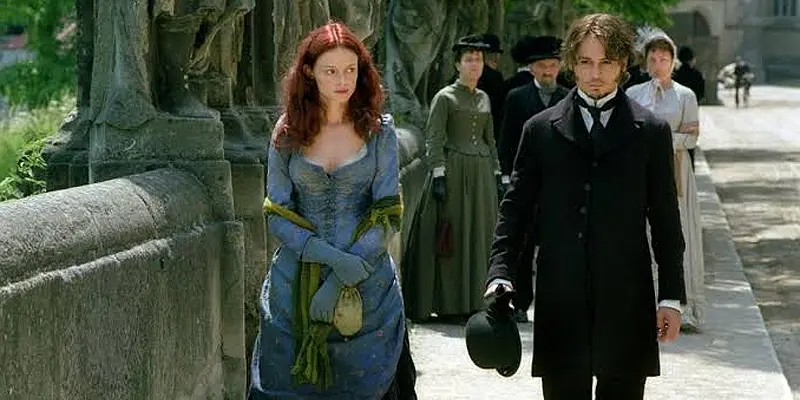
There's also a visual detail that really pulled me out of the story. Mary Kelly looks far too beautiful and well-groomed for the appalling living conditions she supposedly shares with her friends. Her companions, meanwhile, look much more in keeping with the poverty of Whitechapel.
I can understand this being an attempt to create an attractive romantic lead opposite Johnny Depp. But it clashes so sharply with the film's otherwise extraordinary production design that it undermines the realism. Precisely where From Hell shines brightest, this character feels least believable.
Conclusion: an adaptation that falls short
From Hell is a decent film, with magnificent atmosphere and a premise combining very appealing elements. But its plot is unoriginal, the romance never quite convinces, and the adaptation loses much of the comic's complexity.
It's worth watching for its recreation of Victorian London, its basic premise and a few particularly successful moments. Still, if you've read Moore and Campbell's work, it's difficult not to think about everything that was left behind..
From Hell: film details
| Detail | Information |
| Original title | From Hell |
| Spanish release title | Desde el infierno |
| Year | 2001 |
| Directed by | Albert Hughes and Allen Hughes |
| Screenplay | Terry Hayes and Rafael Yglesias |
| Based on | From Hell, by Alan Moore and Eddie Campbell |
| Main cast | Johnny Depp, Heather Graham, Ian Holm and Robbie Coltrane |
| Music | Trevor Jones |
| Cinematography | Peter Deming |
| Running time | 122 minutes |
| Genre | Thriller, mystery and period horror |
Rating
Who it is for
✔️ For fans of period thrillers and Jack the Ripper investigations.✔️ For those who appreciate fine cinematography, production design and dark atmospheres.
✔️ For readers of Alan Moore and Eddie Campbell's comic.
✔️ For anyone who enjoys stories combining crime, conspiracies and esoteric elements.
Who it is not for
❌ For viewers expecting a faithful adaptation of the original comic's complexity.❌ For those looking for an original, surprising detective plot.
Frequently asked questions
What is From Hell about?
The film follows Inspector Frederick Abberline as he investigates Jack the Ripper's murders in London in 1888 and uncovers clues to a conspiracy.
Is From Hell based on a comic?
Yes. It adapts the graphic novel From Hell, written by Alan Moore and illustrated by Eddie Campbell, although it makes major changes to the story and characters.
What are the main differences between the comic and the film?
The comic delves much deeper into Victorian society, power and the occult. The film simplifies those elements and focuses on the police investigation and the relationship between Abberline and Mary Kelly.
Is the film From Hell faithful to Alan Moore's comic?
It retains characters, settings and part of the conspiracy, but substantially changes the narrative approach. The atmosphere is one of the aspects it carries over best from the original.
Who plays Inspector Abberline in From Hell?
Johnny Depp plays Frederick Abberline, the police inspector investigating the Whitechapel murders.
Is the conspiracy in From Hell real?
It has not been historically proven. The film uses theories about Jack the Ripper, the British royal family and Freemasonry as the basis for a fictional story.
How long is the film From Hell?
It runs for approximately 122 minutes, or two hours and two minutes.
Is From Hell worth watching?
Yes, particularly for its excellent recreation of Victorian London and its appealing blend of mystery and conspiracy. However, the plot is fairly conventional and loses some of the comic's richness.

Leave a Reply