
After The Court of Owls and Death of the Family, Scott Snyder and Greg Capullo decided to return to Batman's origins. A risky decision, considering there's already a masterpiece that told us pretty much everything we needed to know about the character's early days. I'm talking, of course, about Batman: Year One, by Frank Miller and David Mazzucchelli.
Snyder takes twelve issues to tell you the story—as opposed to Miller's four—with a far more spectacular approach, new plot elements and a Gotham that, at times, looks quite different from what we're used to.
The result is good, though perhaps too long. The story moves at a good pace, is a great read, and the writer once again shows how well he knows Batman and those around him.
Greg Capullo is better than ever. The artwork is absolutely stunning, with new Batman designs, visually very different situations and coloring that completely transforms the character's usual atmosphere. In fact, I think this is the first time since the two began working together that the artwork genuinely outshines the script.
Zero Year is Snyder and Capullo's third major arc, although chronologically it takes place before the other two, since it tells the story of how Bruce Wayne begins to become Batman.
The story was originally published in Batman #21–27 and #29–33, between 2013 and 2014. In the American editions, it was collected in two volumes:
- Batman Vol. 4: Zero Year – Secret City, which includes Batman #21–24.
- Batman Vol. 5: Zero Year – Dark City, which includes Batman #25–27 and #29–33.
Issue 28 is left out of this main collection. Curiously, the arc also contains three narrative sections, Secret City, , Dark City and Savage City, although the final two were published together in the fifth American volume.
I'm going to review both volumes as a single story, just as I did with The Court of Owls.
The plot of Batman: Zero Year
The plot begins with Bruce Wayne returning to Gotham after spending years away preparing to fight crime. Batman as we know him doesn't exist yet, and Bruce is experimenting with different ways of confronting criminals and making his presence have some effect on them.
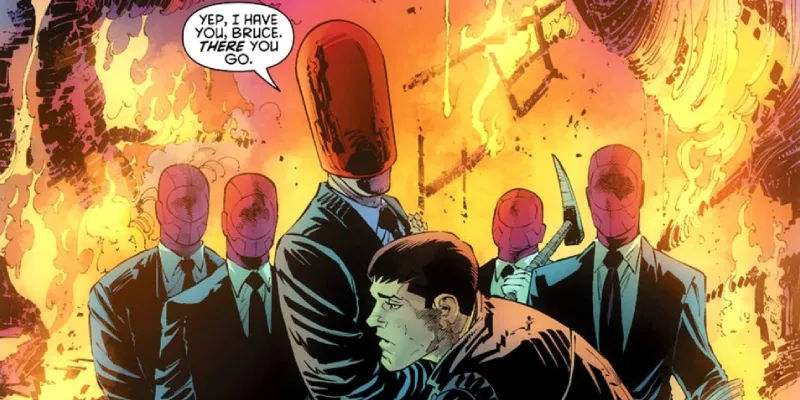
His main enemy during this first stage is the Red Hood Gang, a criminal organization pursuing the usual sort of plan to take over the city.
Later, the spotlight shifts to the Riddler, Edward Nygma, who uses his intelligence and talent for manipulation to push Gotham into an extreme situation.
Meanwhile, we see Bruce's relationships with Alfred, Lucius Fox and Jim Gordon develop, alongside other characters and elements that will eventually become part of Batman's familiar mythology.
The premise is interesting because we know perfectly well where all this will end up, but Snyder manages to give the character's first steps a personality of their own, neither a clone of Miller's nor something completely disconnected from them.
A great beginning… that drags on too long
My favorite part of the entire arc is the first American volume, Secret City..
The Red Hood Gang is well developed and works nicely as the first threat to a Bruce Wayne who is still learning how to become Batman. He's physically and intellectually prepared, but he still needs to find the right way to use his abilities..
The criminal organization's plans are also interesting because of how Snyder develops the plot. The more detective-oriented Batman has to investigate, connect events and work out whom he's up against.
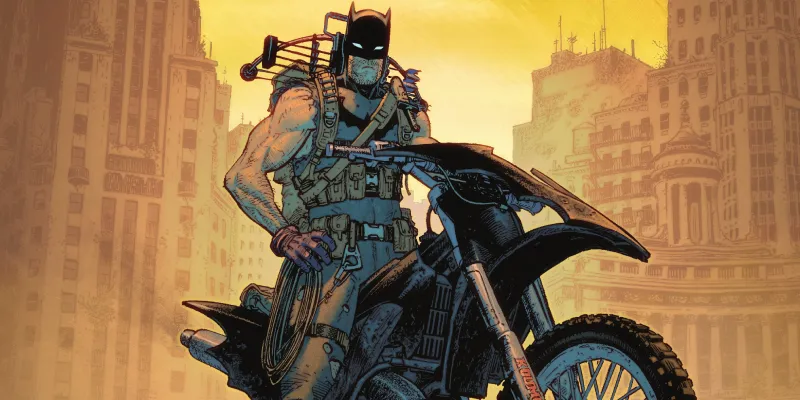
The creators take time to show how Bruce begins to build his identity as a vigilante. There are designs and situations unlike the usual ones, precisely because he's still experimenting and doesn't yet have all the resources he'll possess later.
This first part is excellent, both in its pacing and in the ideas it introduces and the way it uses familiar elements of the character's history.
Perhaps Zero Year should have ended here.
The Riddler becomes too powerful
The problem gradually emerges when Edward Nygma starts taking center stage.
Snyder presents a Riddler who's as intelligent as ever, if not more so, manipulative and dangerous. However, as the story progresses, his ability to control events starts to seem exaggerated..
The sheer scale of what he manages to do in Gotham makes certain situations hard to accept.
The problem is that Snyder has a tendency to make each threat even bigger than the last. We already saw this in The Court of Owls, where the organization's enormous power ended up creating some contradictions with Batman's abilities.
Something similar happens here with the Riddler. The story remains entertaining, but as his plans grow in scale, situations also arise that feel less convincing.
Then there's the length. Twelve issues devoted to Batman's early days, and I think practically the same story could have been told in far fewer pages. Or split into two arcs.
I don't mean the comic is boring, because the pacing holds up and it's a very quick read, but when I finished I was left with the feeling that Snyder had stretched certain situations far too much to create an event bigger than it needed to be..
Greg Capullo is spectacular
But of course there's a flip side to this. Because if there's one thing that makes Zero Year worth reading, it's Greg Capullo's work.
In The Court of Owls I'd already said how surprised I was by how well he'd adapted his style to Batman. Later, in Death of the Family, he demonstrated a magnificent ability to depict horrifying situations and unpleasant characters, particularly that Joker whose face looked ready to fall apart at any moment.
Well, I think Zero Year is his best work up to that point..
We have a Batman who's still building his identity, allowing Capullo to experiment with very different designs, equipment and situations. The artist makes excellent use of this to portray Bruce with a look that predates his definitive appearance but is still instantly recognizable.
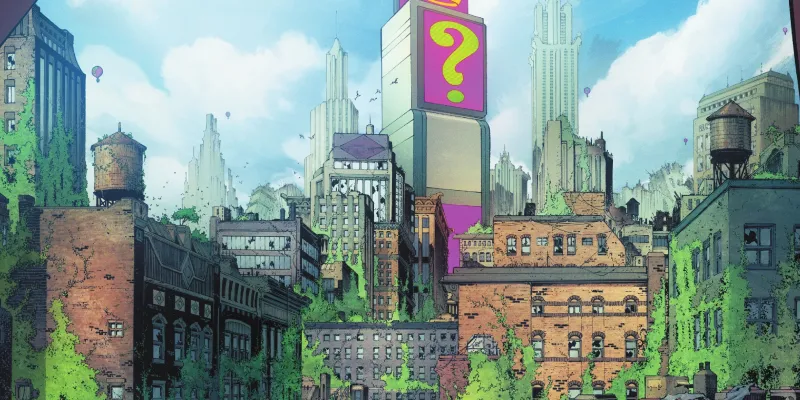
The page compositions are also excellent and, above all, I absolutely love the variety of settings across the twelve issues. The story begins with a recognizable Gotham, but then gradually changes until we get colorful settings far removed from the usual ones.
The colors completely transform the atmosphere
And speaking of color, special mention must go to FCO Plascencia, who's responsible for it, because a huge part of this comic's visual impact comes from his work.
We're used to seeing Gotham depicted in grays, blacks, browns and other muted tones that help convey its dark, decaying character.
In Zero Year we find a rather different palette, particularly in the final third of the story, when the city's appearance changes radically.
Greens, blues and other much brighter colors take center stage, producing pages that are pretty surprising for a Batman comic.
And they work brilliantly. They give it a distinctive visual identity without making the comic stop feeling like a Batman story.
They also allow certain Capullo designs to stand out. Some panels and entire pages make you want to stop just to admire the artwork.
In fact, the visuals end up compensating for many of the issues I have with the plot. Even when the story starts dragging on longer than I'd like, it continues to offer genuinely interesting things visually.
Zero Year versus Year One: two ways of telling Batman's origin
The comparison with Batman: Year One is inevitable, because Frank Miller and David Mazzucchelli created one of the character's most important works by telling the story of his earliest days in Gotham.
And, I'll say it again, they did it in four issues.
That story took a realistic approach, as far as Batman's universe allows. Bruce Wayne was beginning his career as a vigilante while Jim Gordon tried to survive Gotham's police and political corruption.
Miller devoted plenty of space to developing both characters and their relationships with a city where practically everything seemed rotten. Mazzucchelli also supported the story with restrained, elegant artwork perfectly suited to that tone.
Year One is a masterpiece, and I think much of its quality comes precisely from knowing how to tell what's necessary without dragging the story out.
Snyder, by contrast, goes for something much bigger and more spectacular, with threats affecting all of Gotham and a far stronger action element.
Is it on the same level? No. But then (almost) no Batman graphic novel—or one about other superheroes—is.
Snyder respects the character's essential elements
Snyder doesn't try to copy what Miller did. Nor does he betray the essential elements that story established about Batman's modern origins, even though we're talking about a reinterpretation within The New 52 rather than a literal continuation of its continuity.
Bruce is still someone learning to become the vigilante we know, Gordon maintains a complicated relationship with Gotham's police force, and Alfred remains a fundamental figure in his development.
But Snyder introduces his own ideas and develops these characters differently, adapting them to the much more spectacular tone of his run.
And I think that's where he demonstrates one of his greatest strengths as a writer: he knows Batman, his world and the possibilities offered by his characters extremely well..
Alfred has a distinct personality and a relationship with Bruce that goes far beyond simply being his assistant. Gordon also gets interesting treatment, as do the villains, whom Snyder reinterprets without stripping away their defining traits.
I'd already noticed this in the previous two arcs. Snyder knows how to find appealing elements in Batman's mythology and give them his own interpretation. He's also an ambitious writer who tries to bring something different to each major arc and expand Batman's ideas and territory.
The problem is that this ambition also causes some of his most recognizable flaws.
The cliffhangers are starting to lose their impact
One is his tendency to end issues with exaggerated cliffhangers.
In The Court of Owls I'd already noted that Snyder knew exactly where to cut a scene to leave you eager for the next issue. And in Death of the Family he used the same trick again, with threats and situations that seemed impossible to resolve.
In Zero Year he keeps doing it, but after three major arcs you know his tricks a little too well. What's more, this writing style goes hand in hand with the need to keep escalating the threats, even when the story doesn't call for it.
That happens here with the Riddler and the situation he ultimately creates in Gotham. I think Snyder would have achieved a better result if he'd scaled back the conflict's scope and duration a little.
Comparisons can be unfair, but in Year One Miller manages to give a much smaller story far greater significance for the character.
The best of Batman: Zero Year
In case it wasn't clear, the visuals, both Greg Capullo's artwork and FCO Plascencia's coloring..
I'd also highlight the first American volume, Secret City, which I find better balanced than the two sections that follow.
And, of course, the way Snyder uses Alfred, Gordon and the villains, proving he still has good ideas for developing the character's mythology.
The worst of Batman: Zero Year
Mainly, the length.
I think twelve issues are too many for what Snyder wants to tell.
What's more, as the Riddler comes to the fore, the story starts exaggerating his abilities and the scale of the threat far too much, losing some of the credibility it had in the first volume.
And we still get Snyder's excessive cliffhangers.
Conclusion and verdict
I hope I've made it clear that Batman: Zero Year is a good comic, particularly worth recommending to anyone following Scott Snyder and Greg Capullo's Batman run who wants to see their reinterpretation of the character's origins.
It has an excellent first volume, plenty of interesting ideas and a treatment of the characters that shows Snyder knows the Batman universe inside out.
However, as I've said, the author goes overboard with the length and the scale of certain events.
Compared with the previous two arcs, I'd rank it slightly below The Court of Owls, but above Death of the Family, mainly because of the artwork.
And although Year One still strikes me as clearly superior, I appreciate Snyder having the courage to tell his own story rather than simply repeating what Miller had already done.
Technical details of Batman – Zero Year
| Item | Information |
| Title | Batman – Zero Year |
| Original title | Batman: Zero Year |
| Main writer | Scott Snyder |
| Main artist | Greg Capullo |
| Additional scripts | James Tynion IV |
| Additional artwork | Rafael Albuquerque |
| Main inker | Danny Miki |
| Main colorist | FCO Plascencia |
| Original publisher | DC Comics |
| Run | Batman – The New 52 |
| Original publication | 2013–2014 |
| Main issues | Batman #21–27 and #29–33 |
| First American volume | Batman Vol. 4: Zero Year – Secret City, 176 pages |
| Second American volume | Batman Vol. 5: Zero Year – Dark City, 240 pages |
| Genre | Superheroes, action, mystery and origins |
Rating
Who it is for
✔️ For anyone following Scott Snyder and Greg Capullo's Batman run.✔️ For anyone who enjoys Greg Capullo's artwork, because it's spectacular here.
✔️ For anyone who wants to read a reinterpretation of Batman's origins with more action and spectacle than Year One.
Who it is not for
❌ For anyone looking for a short, restrained Batman origin story. In that case, I'd recommend Year One first.❌ For anyone who doesn't enjoy excessively long stories or threats on a gigantic scale.
❌ For anyone who's tired of Snyder's cliffhangers and some of his usual storytelling tricks.
Frequently asked questions
What is Batman: Zero Year?
It's a story arc by Scott Snyder and Greg Capullo that reinterprets Bruce Wayne's early days as Batman during DC Comics' The New 52 era.
How many issues are in Batman: Zero Year?
The main story spans twelve issues of the Batman series: #21 through #27 and #29 through #33, originally published between 2013 and 2014.
What do the two American Zero Year volumes include?
Zero Year – Secret City collects Batman #21–24, while Zero Year – Dark City includes Batman #25–27 and #29–33. Together they contain the complete main arc.
Is Batman: Zero Year the same as Batman: Year One?
No. Year One, by Frank Miller and David Mazzucchelli, tells Batman's origin in four issues. Zero Year is a later, longer and more spectacular reinterpretation by Snyder and Capullo.
Do you need to read The Court of Owls before Zero Year?
Not necessarily, because Zero Year takes place earlier chronologically. However, it's recommended if you want to follow the development of Snyder and Capullo's run in publication order.
Who are the main villains in Batman: Zero Year?
The Red Hood Gang plays a major role in the first part, while the Riddler becomes the main threat as the story progresses.
Is Batman: Zero Year better than The Court of Owls?
For me, it's slightly worse. The Court of Owls has a more interesting story, although Zero Year stands out particularly for Capullo's artwork and its spectacular coloring.
Is Batman: Zero Year worth reading?
Yes. It's an ambitious, entertaining and visually spectacular story, although its length and some excesses in the script keep it from reaching the level of the best Batman works.

Leave a Reply