
The Court of Owls was Scott Snyder and Greg Capullo's calling card on the main Batman series during The New 52 —the initiative intended to reboot DC continuity.
It also became one of those story arcs that left a lasting impression on Batman readers.
I'll review the arc as one story here, although it originally appeared across the first two US collected volumes of the run. The Court of Owls collects Batman issues #1–7, while City of Owls continues with issues #8–12 and Batman Annual #1.
The real core of the story lies in Batman #1–11, but those first two collections are the usual way readers encounter Snyder and Capullo's opening major arc.
This article is also part of my journey through Scott Snyder's Batman run, so if you want an overview of the entire run, I'd start there before diving into individual arcs.
Snyder starts from an appealing, relatively unexplored premise: attacking Batman where he feels safest, in Gotham..
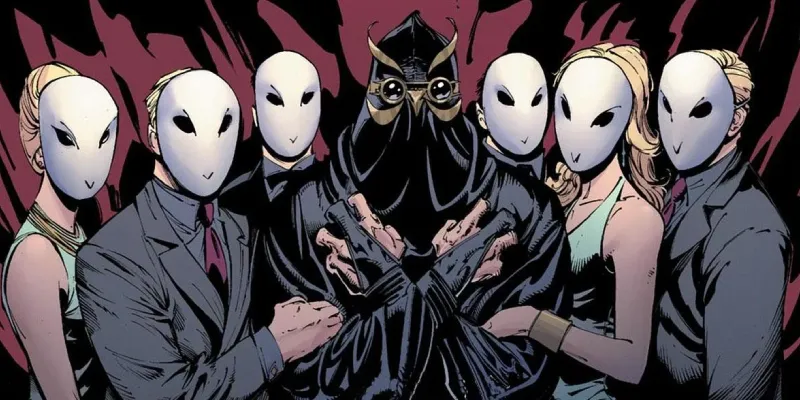
A string of murders leads Bruce Wayne to investigate the possible existence of the Court of Owls, a secret organization allegedly manipulating the city from the shadows for generations.
Naturally, Batman initially refuses to believe such a thing could exist. He knows Gotham, its history, buildings, families, and almost every dark corner. This cannot happen. And yet it is happening.
That's part of the story's initial appeal.
Snyder presents a threat that challenges Batman not (only) with fists but with knowledge. The Court knows Gotham as well as he does, perhaps better, calling into question one of the abilities we normally take for granted in the character.
The idea that an organization could remain hidden for so long from the world's greatest detective, in his own city, clashes head-on with Batman's detective skills, however intriguing the plot may be. Still, if you let that slide, the story works.
Gotham as another character
Snyder uses Gotham without recycling its usual landmarks, instead trying to expand its history through small details, buildings, legends and places that feel as though they have always been there.
Elements such as the gargoyles on a particular tower, or the connection between architecture and the founding families, make the conspiracy feel woven into the city itself.
Gotham is more than a backdrop. It has memories, secrets and layers even Batman knows nothing about. That makes the Court feel more threatening, too.
The problem is what I mentioned earlier: the bigger and older the conspiracy, the harder it becomes to explain why Batman never uncovered a single clue. Snyder is so determined to raise the stakes that he sometimes undermines Batman's very ability as a detective.
On the other hand, although the Court of Owls works as a conspiracy, its weapons, the Talons, also pose a physical threat that feels very real.
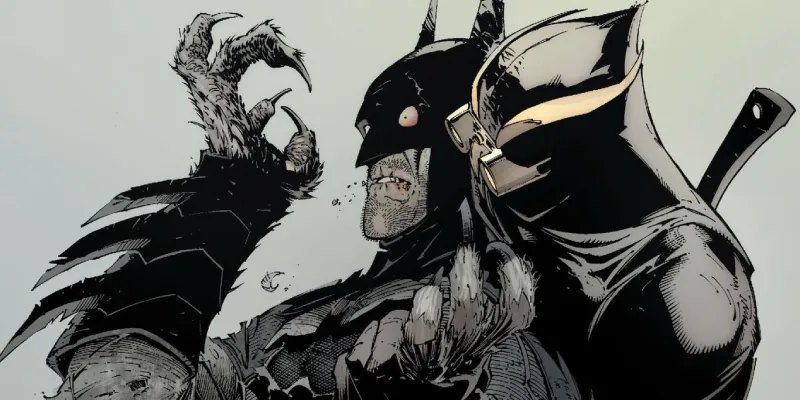
For much of the arc, you feel Batman is facing something that could genuinely overwhelm him. On a first reading, sequences such as the famous labyrinth make you wonder how on earth he'll escape.
Moments such as Bruce Wayne's fall from the tower, or the first time a Talon reveals that the usual human rules don't apply to it, however well trained someone may be, also work. Without spoilers, those scenes make this new enemy feel remarkably dangerous.
The problem comes as the mystery begins to unravel. That's why I think the first volume works slightly better than the second. The setup, mystery and sense of danger are stronger than the resolution. Even so, both volumes maintain a high standard.
Greg Capullo works better than I expected
I already knew Greg Capullo well from his work on Spawn , so I expected denser art here, crammed with lines and details.
Instead, he simplifies his style considerably on Batman—without losing his identity—and I think the work benefits.
The pages are cleaner and easier to follow, the characters show plenty of expressiveness and, above all, Capullo knows how to adapt the atmosphere to each scene. He can be sinister and oppressive when the arc approaches horror, but much more open and bright when depicting high society in Gotham..
He may not be the world's greatest visual storyteller, but he more than makes up for it with expressiveness and atmosphere. And he absolutely nails the horror scenes.
Snyder and his cliffhangers
Snyder makes Batman his own, that's clear. His approach to scripting is also distinctive, and one of his trademarks is his use of cliffhangers..
He uses them well, knowing exactly where to end an issue to force you to keep reading, but he also overdoes them. And not just in The Court of Owls, but throughout much of his run.
After enough issues, you start assuming that many of those seemingly impossible situations will quickly be resolved, and the trick loses some impact.
Even so, believe me, they really hook you on a first reading.
The best of The Court of Owls
What I value most is its ambition and, especially, the sense of danger..
For much of the arc, Snyder makes Batman seem genuinely outmatched, no small feat for a character who always has a plan, even for things that haven't happened yet.
I also love how Gotham is portrayed, Capullo's work, and how entirely new enemies feel credible almost from the moment they appear.
The worst of The Court of Owls
The narrative tricks.
Without spoiling anything, some revelations and solutions feel too contrived, and the story loses some force once it abandons the mystery and begins explaining everything.
What's more, the Court's sheer scale creates the arc's central contradiction: the more impressive the organization becomes, the less believable it is that Batman knew nothing about it.
Conclusion and verdict
The Court of Owls strikes me as a good Batman story and an excellent way to open Snyder and Capullo's run.
I think the first volume is a little better because the premise is stronger than the resolution, but even once the story starts revealing its tricks, it remains highly enjoyable.
What makes the arc memorable isn't just the Court or the Talons, but everything it encompasses: Gotham, Batman's detective skills, the Wayne family history, horror, conspiracy, and the constant feeling that Bruce may, for once, be facing something too big even for him.
I'd recommend it both to longtime Batman readers and to anyone who simply wants a good place to start. Veteran readers will better appreciate the scale of the threat—and the places Snyder forces the plot. New readers may find those same choices easier to accept.
Either way, it's a good comic, and you'll remember it—or at least parts of it—years after reading.
If you enjoyed this review, here are more articles about Scott Snyder's Batman
- Batman – The Court of Owls
- Batman – Death of the Family
- Batman – Zero Year
- Batman – Endgame
- Batman – Superheavy / Bloom
- Scott Snyder's Batman
I'd add these sections after the conclusion and before the list of other articles in the series:
Batman – The Court of Owls: facts and publication details
| Item | Information |
| Title | Batman – The Court of Owls |
| Original title | Batman: The Court of Owls / City of Owls |
| Writer | Scott Snyder |
| Main artist | Greg Capullo |
| Inker | Jonathan Glapion |
| Original publisher | DC Comics |
| Run | Batman – The New 52 |
| Original publication | 2011-2012 |
| First US volume | Batman Vol. 1: The Court of Owls — Batman #1-7 |
| Second US volume | Batman Vol. 2: The City of Owls — Batman #8–12 and Batman Annual #1 |
| Main issues in the arc | Batman #1-11 |
| Genre | Superheroes, mystery, conspiracy, action and horror |
Rating
Who it is for
✔️ For anyone after a good Batman story.✔️ For readers who enjoy Greg Capullo's art.
✔️ For anyone looking to start Scott Snyder's acclaimed run.
Who it is not for
❌ For readers who don't like Snyder.❌ For anyone expecting a masterpiece. It's good, but not quite that good.
Frequently asked questions
What is the Court of Owls?
A secret organization bound to Gotham's history, operating in the shadows for generations and challenging how well Batman really knows his own city.
Who wrote Batman – The Court of Owls?
The arc was written primarily by Scott Snyder, with Greg Capullo as the main artist.
Which comics are included in The Court of Owls?
The main story covers Batman #1–11. The first two US collected editions include Batman #1–12 and Batman Annual #1.
Do you need to read anything before The Court of Owls?
No. It works well as an entry point and requires no in-depth knowledge of previous Batman runs.
Is The Court of Owls a good Batman story for beginners?
Yes. It introduces the character, Gotham and his detective side effectively, although longtime readers will better appreciate the scale of the threat.
What are the Talons in Batman?
The Talons are the Court of Owls' agents and assassins. They work particularly well while the story keeps their abilities mysterious.
Is The Court of Owls better than City of Owls?
Both are good, but the first volume works better thanks to its mystery and sense of danger. The second focuses more on action and resolving the conspiracy.
Is The Court of Owls worth reading?
Yes. It's an ambitious, distinctive arc with a credible threat that really puts Batman on the ropes for much of the story.

Leave a Reply