
Final Fantasy X is one of those rare games you remember with particular fondness.
It was the first game in the series I played, apart from a couple of far-too-brief encounters with entries VII and VIII.
Unlike other games from that era, I have never played it again. The journey was so good that I preferred to leave the memory exactly as it was and explore other entries in the series.
Now that it is turning 25 —it came out in Japan in 2001—I think this is the perfect time and excuse to talk about it and explain why I hold it in such high regard.
After the trailer, I’ll tell you what I truly loved about it.
The combat system
As I said, I had never played a Final Fantasy before, although I had played role-playing games with turn-based combat, so I was not completely new to this, but almost.
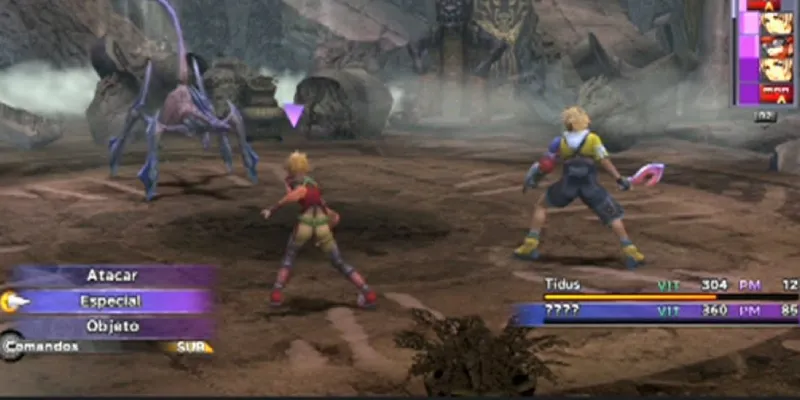
Once I began to understand the system—status effects, speed, swapping party members, abilities…—I loved the combat.
In fact, I liked it so much that, even today, I still consider it the best in the series. It uses proper turns, not Active Battle with a time gauge like earlier FF games.
There is a clear order, and you can take as long as you need to choose and carry out the action you want. You can also clearly see the effects of Haste and Slow.
It is far more strategic and lets you calmly decide your next move, something you will appreciate in tough, close fights such as the one against the Aeon secret Anima.
I’m surprised no other game in the series has used a combat system similar to this one.
The blend of linearity and open world
The game was heavily criticised because, for the first time in the series, it had no world map and followed a somewhat more linear structure.
In my opinion, and as a newcomer to the series, I never saw that linearity as a flaw. I think the game’s gameplay is well paced and, after a certain point, you can go almost wherever you want.
FF XIII felt much more like a corridor to me, but here I think everything is tied together quite well.
The side quests
Getting the legendary weapons and defeating the secret Aeons is a real challenge. Some are better than others—in fact, a few quests are absurdly frustrating—but when you finally complete one, the rush is considerable.
Once you have finished the game (or almost) and start levelling up and chasing the remaining achievements, that is when FF X truly shows its full potential.
That said, Blitzball, while entertaining once you have a decent team, is still an extra with a player-control system that could be much better.
The graphics
These days, the main reason I recommend this Final Fantasy is its gameplay, but it also has other strengths worth mentioning.
To begin with, it was the first entry released for the brand-new PlayStation 2, back in 2001.
Thanks to the power of the hardware, it became the first fully 3D FF in the series.
Square was able to leave behind the pre-rendered backgrounds used by the series on the original PSX—which I personally never liked compared with those in the earlier 2D games—and create a genuinely interesting three-dimensional world. Beautiful at times, dazzling or dark at others.
The character design, modelling and facial animations were all up to the task. It was also the first time they spoke.
The characters had voices
Yes, because until this entry the characters communicated through text. From this point on, they spoke.
It may seem like a small, obvious step, but compared with earlier entries, voices made a huge difference in giving the characters—especially the leads—more personality.
A thoroughly cinematic Final Fantasy
Combine the graphics and voices with cutscenes that made those in the PSX entries look primitive, and you get a game that was beginning to blur the line between cinema and video games.
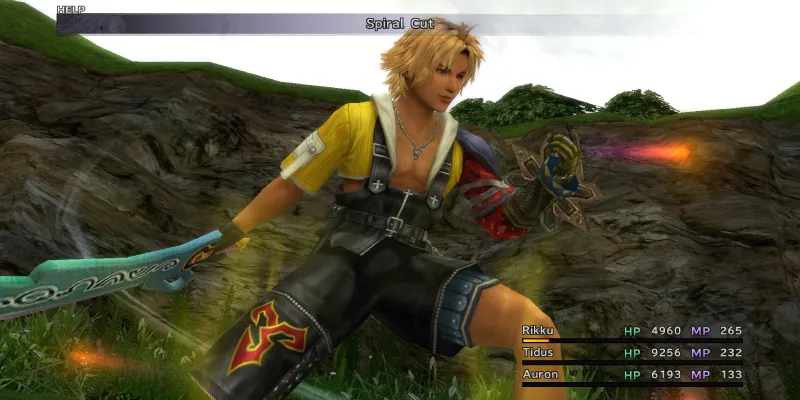
As I said, those three elements—graphics, cutscenes and voices—together with a sublime soundtrack, drew you further into the story and gave you feelings beyond the simple fun of playing. It made you feel things that 2D sprites and the shaky polygons of the PlayStation 1 could not. At least they did not for me, because I always felt I was playing a game, whereas here that feeling sometimes disappeared.
I still remember the introduction of Anima and Dark Yojimbo before their fights as if it were yesterday. Very, very few games have left that kind of impression on me.
An outstanding soundtrack
Nobuo Uematsu shines as usual.
Or even more than usual.
I genuinely cannot decide whether this is the best soundtrack in the series or whether that title still belongs to Final Fantasy VI and Terra’s Theme.
Either way, one thing is clear to me: To Zanarkand, this game’s main theme, is among the top three in the entire series without a doubt.
The story
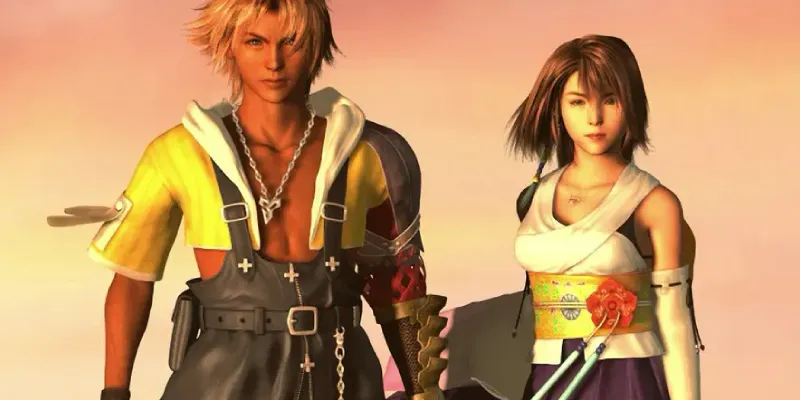
I’ll be honest here: although this is the Final Fantasy with the most highly regarded plot—or one of them—it did not fully win me over, apart from certain scenes and moments, usually involving Tidus and Yuna.
Maybe it was because I played it at 18 after watching and reading many films, series and comics, but the truth is that the story itself seemed fairly ordinary to me. Well told, but nothing exceptional. Very Japanese.
And the supporting cast, even the protagonists, are basically shells with a few strokes of characterisation.
Of course, I later played other games in the series, and in every case their stories seemed weaker than this one, so if you enjoyed the plots of other FF games, you will definitely enjoy this one.
The progression system: the Sphere Grid
There is always debate between those who argue that the system offers enormous freedom of progression and a brilliant, constant sense of growth, and those who say that by the end all seven protagonists can become clones.
And the truth is, I agree with both sides.
I think it was a great decision to allow so much freedom of choice in building each character however we want, but I also remember completing the entire grid with every character and thinking exactly that: now they are all extremely similar.
Even so, I think that, all in all, the positives outweigh the negatives.
Random encounters and pacing
Earlier I said this game acts as a hinge for the series, setting the direction later entries would follow, especially visually, while still reusing conventions from the past.
This is the perfect example.
Random encounters were one of the most distinctive features of this kind of game, and FF X keeps them.
Do they break the pace?
Yes.
Can they be frustrating?
Also yes.
I do not have a clear-cut view. I see the positives—they are entertaining unless you are heavily over-levelled, and walking through the environments feels tense—but also the negatives: they can be dull, repetitive and offer little when your level is much higher. And they interrupt the pace.
In any case, for what it is worth, there are items you can equip to avoid them, although you will only obtain them in the later stages of the adventure.
The best of Final Fantasy X
In my opinion, you should play this game for:
- The combat system.
- The soundtrack.
- (Some of) the side quests.
- The cinematic approach.
The worst of Final Fantasy X
What feels dated today:
- Good graphics, but far behind modern standards (the remaster improves them somewhat).
- (Some of) the side quests.
- The random encounters; perhaps there was another way.
Is it better to play the original or the remaster?
Overall, the remaster is the better choice.
Almost every change improves on the original except the facial expressions, which in some cases look better in the original than in the remaster.
You also get options such as disabling random encounters.
If you are replaying it, I would recommend the remaster 100%.
If this is your first time, it may be better to play the original so you can better understand what it represented when it was released.
Verdict: is Final Fantasy X still worth playing today?
Yes, absolutely, even if only for the combat system.
It has aged quite well. Apart from the graphics and the now very dated random encounters, the rest of the content still feels entirely relevant today.
In a ranking of the series, and bearing in mind that I have not played every entry, Final Fantasy X would come second for me, behind only the magnificent Final Fantasy VI.
If you enjoy turn-based role-playing games—including Tactical / Strategic Role-Playing—or the series in general, give it a chance.
Just do not be surprised if the hour counter goes past 100.
That may sound like a lot—until you decide to obtain the Celestial Weapons or defeat Dark Yojimbo.
Once you try, you will understand what I mean.
Rating
Who it is for
✔️ For anyone who wants to start with Final Fantasy without needing to have played an earlier entry.✔️ For anyone looking for one of the best combat systems in the whole Final Fantasy series.
✔️ For players who enjoy turn-based role-playing games and want time to think through every move.
✔️ For anyone who values a long adventure with plenty of side content and challenges capable of pushing the counter past 100 hours.
Who it is not for
❌ For anyone who cannot stand random encounters or constant interruptions while exploring.❌ For anyone looking for an open world from the outset and total freedom to roam.
❌ For anyone who needs modern graphics.
Frequently asked questions
Is Final Fantasy X worth playing today?
Yes, especially for its combat system, music and cinematic approach, although you will have to accept dated graphics and random encounters that now feel rather tiresome.
Do you need to play other Final Fantasy games first?
No. Each main entry tells an independent story, so you can start directly withFinal Fantasy Xwithout knowing the previous games.
Does Final Fantasy X have turn-based combat?
Yes. It uses true turns and shows the order in which characters and enemies will act, letting you choose every action calmly and swap party members during combat.
Is Final Fantasy X too linear?
It is more linear than some earlier entries, but the route is well integrated into the story and later offers plenty of freedom to revisit places and complete side content.
How long is Final Fantasy X?
The main story can take several dozen hours, but completing side quests, obtaining the special weapons and fighting optional enemies can easily push a playthrough beyond 100 hours.
Is it better to play the PS2 original or the remaster?
Overall, the remaster is more recommendable thanks to its resolution and extra options, although the original preserves some facial expressions better and helps you understand the impact the game had at the time.
Is Final Fantasy X’s story as good as people say?
It is well told and has many memorable moments, especially around Tidus and Yuna, although this review finds the story solid rather than exceptional and the characters somewhat shallow.
Is the Sphere Grid complicated?
It may seem confusing at first, but it soon makes sense and lets you decide how the characters develop as you move along its different routes.
Does it have much side content?
Yes. It includes special weapons, secret Aeons, optional enemies,Blitzballand several challenges, although some activities are much better than others and a few can be maddening.
Do you need to play Final Fantasy X-2 afterwards?
No,Final Fantasy Xtells a complete story on its own;Final Fantasy X-2is an optional sequel for anyone who wants to return to Spira.

Leave a Reply