
Disclosure Day is based on an original idea by Steven Spielberg, which is no surprise at all after seeing the film.
The director gave David Koepp a 38-page treatment to turn into a screenplay, reviving a collaboration that goes back to Jurassic Park and War of the Worlds. This time they went through 42 versions of the script, a record for Koepp.
The idea came after Spielberg read reports in 2017 about U.S. military pilots who said they had seen objects they could not identify. He wanted to ask what would happen if humanity had enough evidence to publicly accept that we are not alone.
That may have been the original idea, but the plot certainly goes in a different direction, as we will see.
Then there is the rest of the team, which is also very familiar: Janusz Kamiński on cinematography and John Williams on music. In other words, a team that has worked together on many films, so everything looks -and sounds- familiar.
As for the cast, it is top-tier: Emily Blunt, Josh O'Connor, Colin Firth, Eve Hewson and Colman Domingo. Not much to add here, except that they are all excellent, especially Blunt, in a far from easy role.
Plot of Disclosure Day
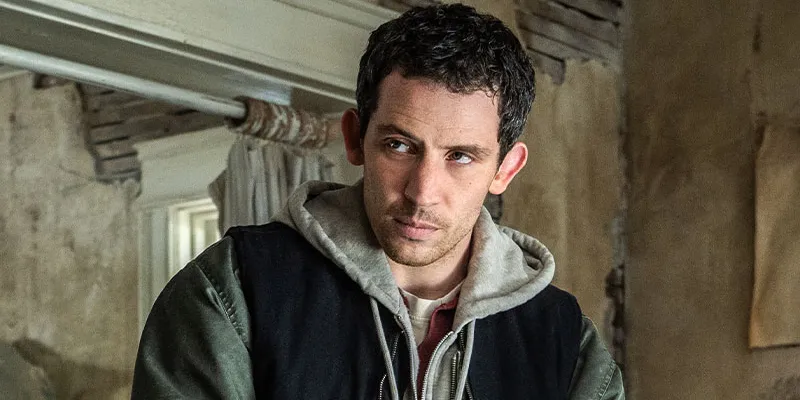
The story revolves around Margaret Fairchild, a Kansas City meteorologist played by Emily Blunt, and Daniel Kellner, a cybersecurity expert played by Josh O'Connor.
They both become caught up in information Kellner wants to publish that could prove that humanity has not been alone for a very long time and that certain organizations are the ones keeping the secret.
From there, Spielberg builds a mix of conspiracy, pursuit and adventure between the organization controlling the secret and the protagonists fleeing it in order to publish the information.
All of it seasoned with light doses of metaphysical questions and answers -mainly religious in nature- around the initial question: what would happen if someone managed to prove irrefutably to the entire world that extraterrestrials exist.
Although it starts from a very science-fiction premise, the story actually goes in another direction. Adventure is what takes precedence over everything else here. If you were expecting Minority Report, that is not what you are going to get, at least not at its core.
Spielberg in his element
There is no denying that when we talk about Spielberg, we talk about cinema. Or, at least, about one way of understanding the seventh art. The film is pure entertainment and spectacle, but in a classic vein.
Because that spectacle has nothing to do with slow motion and hyperactive editing; it serves the story instead. The director is a great visual storyteller, which is why some elements of the film that we will mention later feel so jarring.
The way the protagonists' abilities develop is well told. When the time comes to use them, you believe it. It does not feel implausible.
Of course, part of the “blame” lies with an Emily Blunt who, as I said before, is fantastic and carries a large part of the film.
It is also clear that the director knows the genre inside out and draws on his previous experience to make the film work. The obvious references are E.T. and Close Encounters of the Third Kind for the extraterrestrial contact and humanism, but there is more.
Some of Margaret's actions inevitably recall those of the precog in Minority Report during her escape with Tom Cruise. The villain, the constant pursuit and the futuristic technology echo Ready Player One. And the staging of several action scenes recalls Tintin.
John Williams's score reinforces that feeling of classic Spielberg even further. His music accompanies the adventure in a traditional, instantly recognizable way.
So far, so good, but let's move on to what is not so good.

What I didn't like
Spielberg has spent decades making family films without treating the audience like children. Here, however, the enemies' simplistic or absurd actions — I commented to my partner how much they sometimes resembled the Stormtroopers from Star Wars— some of the protagonists' reactions (especially Kellner's) and the lack of explanation for several inconsistencies make it feel that way at times.
And surprisingly, that damages the suspension of disbelief more than the extraterrestrials themselves.
This problem is made worse by the lack of internal logic. Maybe there is one, but the viewer is never clear on who these beings are, what they want, what powers they have and why certain things happen (the “Signs moment” is one of them).
It feels as if the limits and powers change depending on what the scene needs.
Also, in that need to answer the original question, there appears a religious component that is more curious than necessary. One character's past as a nun and humanity's possible reaction toward God if extraterrestrial existence were confirmed both feel rather forced.
That said, this aspect of the film has an interesting point or two, such as when the nun notes that man is God's greatest creation “on Earth”. It is a small but interesting idea: a revelation like this might not destroy faith, but force it to broaden its framework.
On the other hand, moving to the technical side, the digital animals are pretty bad. They look as if they were made with last year's AI rather than CGI. Surprising from someone who was able to recreate the dinosaurs of Jurassic Park more than thirty years ago.
There are also moments that feel too artificial, due to a not entirely polished edit. Here are two examples: the car accelerating from zero to a hundred faster than Toretto before plunging off a cliff, or the protagonists getting onto the train during their escape.
Curiously, everything involving the extraterrestrials works much better. Perhaps because Spielberg aims for a more restrained and realistic look there.
Verdict
Disclosure Day is cinema. It is entertaining, Emily Blunt is excellent and Spielberg still knows how to deliver spectacle with a story behind it.
But it is not a film I would recommend to almost anyone. It is far below the director's works mentioned earlier (Minority Report, Ready Player One, E.T.) and, of course, nowhere near the best of adventure or science fiction.
Nor does it bring anything particularly original in its screenplay, imagery or music.
So what we have is a film that you will not regret watching, but if you miss it, that is no big deal either.
That is why I think that, in a few years, few of us will mention it when talking about Spielberg's filmography. It will go unnoticed among colossal works. That is what comes with being one of cinema's greats.
Technical details
| Field | Data |
| Title | Disclosure Day |
| Year | 2026 |
| Runtime | 145 minutes |
| Director | Steven Spielberg |
| Screenplay | David Koepp, based on an original story by Steven Spielberg |
| Main cast | Emily Blunt, Josh O'Connor, Colin Firth, Eve Hewson and Colman Domingo |
| Genre | Science fiction / adventure / thriller |
| Country | United States |
| Music | John Williams |
| Cinematography | Janusz Kamiński |
| Rating | 3/5 |
Rating
Who it is for
✔️ For anyone who enjoys Spielberg at his most classic.✔️ For anyone looking for family adventure.
Who it is not for
❌ For anyone expecting a science-fiction film.❌ For anyone expecting one of the director's great films.
❌ For anyone who needs very tightly consistent internal logic.
Frequently asked questions
Is Disclosure Day worth watching?
Yes, especially if you like Spielberg at his most classic and his adventure films. It is entertaining and well directed, but I do not think it is essential viewing or one of his best works.
Is Disclosure Day science fiction?
Yes, although for me it works much better as an adventure film. The extraterrestrial technology and premise clearly belong to science fiction, but the emphasis is on the pursuit, the spectacle and the characters.
Does Disclosure Day contain spoilers?
Not this review. I avoid revealing the major twists and the details that are best discovered while watching the film.
Is it similar to E.T. and Close Encounters of the Third Kind?
Yes. It shares with both of them Spielberg's interest in extraterrestrials, contact with the unknown and a very humanistic view of the story.
What other Spielberg films does it recall?
It also reminded me of Minority Report because of the female lead's escape, of Ready Player One because of its use of futuristic technology and certain chases, and of Tintin because of the staging of some action scenes.
Is Emily Blunt good in Disclosure Day?
Yes. Emily Blunt is excellent and one of the film's strengths.
Who composed the soundtrack for Disclosure Day?
John Williams. His music has a very classic tone and greatly reinforces the feeling that this is Spielberg in his most traditional mode.
Is Disclosure Day a family film?
Yes, although at times the simplification of the enemies, certain decisions by the characters and some inconsistencies make it feel as if it were aimed at a fairly young audience.
Is it among Spielberg's best films?
Not for me. It shows craft, a sense of adventure and has some good moments, but it is far from his masterpieces and does not particularly stand out within science fiction or adventure cinema either.
What rating does Disclosure Day get?
I give it a 3/5. It is a film you may enjoy if its approach works for you, but not one I would recommend to almost anyone.

Leave a Reply