
Before I start, I should say that horror isn't one of my favourite film genres. Although I've thoroughly enjoyed works such as Hereditary or Event Horizon, I prefer other things, so when I watch a film of this kind, I need something different and interesting to enjoy it.
Backrooms, by Kane Parsons, has that. It's a strangely entertaining, unusual and quite unsettling film, full of images and situations that stick in your head.
Its endless corridors and rooms, its oddly stacked objects, shadows and sounds… The film manages to make utterly ordinary spaces, which shouldn't provoke any reaction at all, feel strange and even threatening.
Is it a great film? Not quite, for me. But it is a cinematic curiosity that's well worth recommending, provided you're willing to play along.
What is Backrooms about?
Clark (Chiwetel Ejiofor) is an architect who has ended up working in a furniture store and is going through a difficult time personally. At work, he discovers a mysterious entrance to a place that shouldn't exist.
Beyond that door, he finds a succession of rooms, corridors and spaces that seem to stretch into infinity. Recognisable places, like offices or commercial buildings, whose layout and characteristics defy any rational explanation.
Meanwhile, we meet Mary (Renate Reinsve), Clark's psychologist, who will eventually become involved in this strange universe.
I won't tell you much more, because much of the appeal of Backrooms lies precisely in discovering what's behind those spaces and how they relate to the characters.
Incidentally, the film grew out of the Backrooms internet phenomenon, popularised in particular by the short films director Kane Parsons began posting on YouTube in 2022.
I haven't watched those original videos, so I won't compare them. My analysis is limited to the film, which is what I've seen.
An unsettling atmosphere
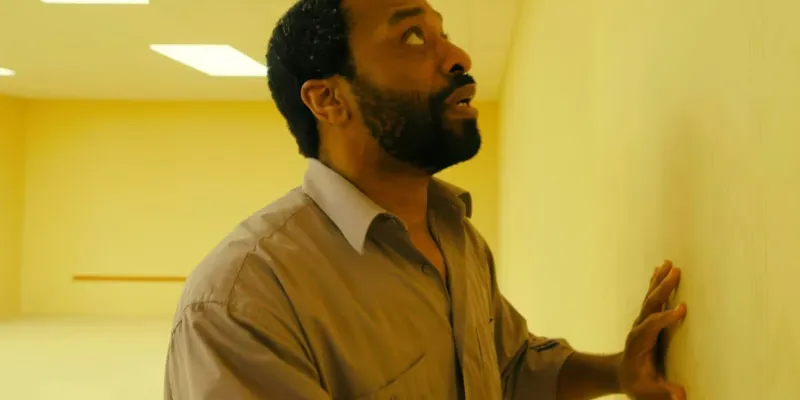
For me, the most interesting thing about Backrooms is its visual concept.
Those endless corridors, empty rooms, repetitive spaces and impossible layouts create a very peculiar feeling. Everything looks familiar, yet something isn't quite right.
These are what's known as liminal spaces, transitional places we normally pass through to get somewhere else: corridors, waiting rooms, lobbies or rooms in anonymous buildings.
But here those spaces seem to exist for their own sake, without any obvious purpose or regard for the architectural rules we know.
And it's precisely that familiarity that makes them so disturbing. You're not looking at a fantasy universe full of bizarre elements, but rooms you might find in any building.
Except something is wrong.
The film makes excellent use of that idea, creating images that stay with you long after the credits roll.
In my case, that's probably what I'll remember most about Backrooms. Rather than any particular scene or especially frightening moment, I'll remember the feeling of wandering through places that are strange yet completely familiar.
In that sense, this setting reminded me of an indie game I'd recommend to absolutely anyone, The Stanley Parable. At certain moments they evoke similar feelings through their environments and the protagonist's bewilderment.
A film with its own logic
To enjoy Backrooms : you have to accept its internal logic..
What happens in the film doesn't follow the rules of our world. That's why you mustn't try to interpret every situation rationally.
Because things don't work as they should. Spaces, events and the relationships between certain elements obey a logic that belongs exclusively to that universe.
So you need to make a little effort as a viewer.
You have to believe what you're seeing and accept that there are rules you may never fully understand.
If you can play along, great. The film offers plenty of intriguing ideas, unsettling images and disturbing situations.
If you can't, you might not even finish it.
That's one of the main reasons why Backrooms may work brilliantly for some viewers and leave others thoroughly unmoved.
The story and its protagonists
Another thing that caught my attention was how the film uses its two main characters.
At first, everything seems to revolve around Clark, the architect played by Chiwetel Ejiofor. He's the one who discovers this strange universe and introduces us to its peculiarities.
However, as the story progresses, Mary, his psychologist, becomes increasingly important.
In fact, I found it interesting how the film ultimately makes Mary its true protagonist, when Clark initially appeared to be the central character.
It's an interesting shift in perspective that I won't explain further, because I'd rather you experience it yourself.
Visuals that carry the film
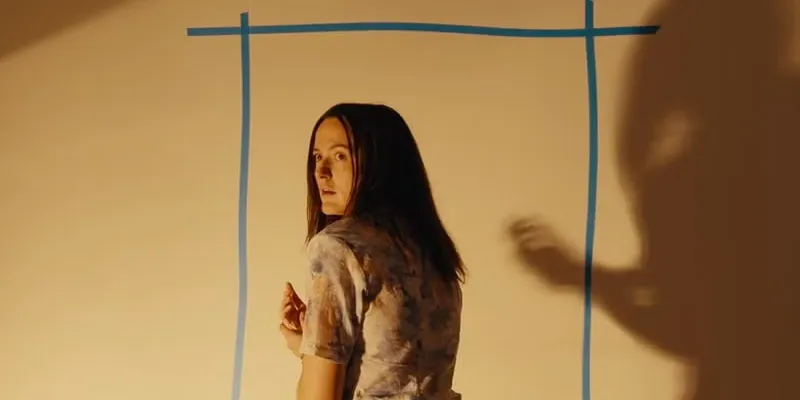
In a film like this, the design of the spaces is everything.
The sets are far more than simply where the action takes place. They are a huge part of the appeal of Backrooms and essential to conveying the sense of strangeness that runs through the story. It's similar to what happened with the hotel in The Shining..
This shows that, to create a memorable visual universe, you don't always need spectacular sets or CGI. Sometimes it's enough to change what we expect to find in an apparently normal place. For example, using a fairly impersonal aesthetic, with warehouse rooms and corridors repeating with more or less subtle variations, is enough to build an instantly recognisable cinematic world.
An open ending
Without giving away spoilers, the ending of Backrooms leaves quite a few questions unanswered, which seems consistent to me.
After spending an entire film accepting a reality beyond our understanding, it would have been strange if everything had suddenly been resolved by a perfectly orderly explanation.
There isn't one.
The ending maintains that ambiguity and leaves you thinking about what really happened.
In that regard, I'd love to know what explanation the writer and director actually have in mind for the ending.
Because the interpretations we viewers come up with are one thing, and the creators' own logic is another.
In any case, you don't need every answer to accept the ending.
The best and worst of Backrooms
On the plus side, there's the atmosphere: the corridors and liminal spaces create a very particular sense of unease, which goes hand in hand with its visual originality, making everyday places seem strange and memorable.
The ending is open and fits the logic of the world the film presents, leaving you wondering what really happened.
On the downside, be aware that to enjoy it you have to play along. If you need rational explanations for everything that happens, it may frustrate you. Indeed, its premise is rather unusual. The combination of horror, mystery and surreal logic won't necessarily work for everyone.
Conclusion: is Backrooms worth watching?
I found Backrooms entertaining, different and full of interesting ideas, but it didn't quite blow me away.
Its main strength lies in creating an unsettling reality from apparently ordinary spaces and making some of those images stay in your mind.
I also appreciate its willingness to follow its own logic, even if that means asking viewers to accept situations without any obvious explanation.
I managed to go along with it and enjoy what it offers. But since horror isn't exactly my favourite genre, it's not a film I'll hold particularly dear either.
Still, it made me think, and that's already quite something in today's cinema, where everything is spoon-fed to us.
Backrooms technical details
| Item | Information |
| Title | Backrooms |
| Year | 2026 |
| Director | Kane Parsons |
| Screenplay | Will Soodik |
| Cast | Chiwetel Ejiofor, Renate Reinsve, Mark Duplass, Finn Bennett and Lukita Maxwell |
| Genre | Horror, mystery and science fiction |
| Runtime | 110 minutes |
| Spanish theatrical release | 5 June 2026 |
| US distributor | A24 |
| My rating | 3/5 |
Rating
Who it is for
✔️ For fans of psychological horror and unsettling atmospheres.✔️ For anyone seeking unusual films with intriguing visual ideas.
✔️ For viewers who enjoy interpreting what they see and continuing to think about it after the credits.
Who it is not for
❌ For anyone seeking mainstream horror, blood and deaths.❌ For viewers who need clear, entirely rational explanations.
❌ For those who prefer conventional stories with familiar rules.
Frequently asked questions
Is Backrooms (2026) worth watching?
Yes, especially if you like unusual horror films. It's entertaining, unsettling and packed with memorable images and ideas.
Is Backrooms scary?
More than outright fear, what stands out is the unease caused by its impossible spaces and the feeling that something isn't right.
Do I need to watch the original videos to understand Backrooms?
No. I haven't seen Kane Parsons' original short films and had no trouble following the movie, although you have to accept its universe's peculiar logic.
What are the liminal spaces in Backrooms?
Places such as corridors, empty rooms and passageways that feel strangely unsettling because of their layout and appearance. In the film, they're part of a universe that doesn't obey our familiar rules.
Does the ending of Backrooms have an explanation?
The film leaves several questions open to interpretation. Personally, I think that ambiguity fits both the story and its universe.
Who is the protagonist of Backrooms?
The story initially centres on Clark, played by Chiwetel Ejiofor, but Mary, his psychologist, played by Renate Reinsve, becomes increasingly important as the film progresses.

Leave a Reply