
After ten volumes, Scott Snyder and Greg Capullo say goodbye to Batman with Epilogue, a collection that, unlike most previous instalments, does not develop a single story arc but brings together five standalone stories of different lengths, ambitions and quality.
Some look back at the character's past, others explore his future, and one serves as a bridge to the next publishing era. The result isn't bad, although the quality is uneven.
After reading all ten volumes, it's also hard not to wonder whether Scott Snyder's Batman might have worked better with the stories arranged differently and a different ending.
Five stories to say goodbye to Batman
Epilogue collects material published at different points during The New 52, some of it even before the events of Superheavy and Bloom. As a result, there is no continuous narrative running through them all.
This structure recalls Graveyard Shift, the sixth American volume, which also collected standalone stories to round out the series.
Here, though, the book serves an additional purpose: saying goodbye to a run that began with The Court of Owls and delivered some of the character's finest modern stories.
What we get is one superb story that stands head and shoulders above the rest, several interesting extras and the odd completely disposable tale.
Remains: Batman versus Lex Luthor, the best of the volume
The first story, originally published in Batman: Futures End #1, is simply magnificent.
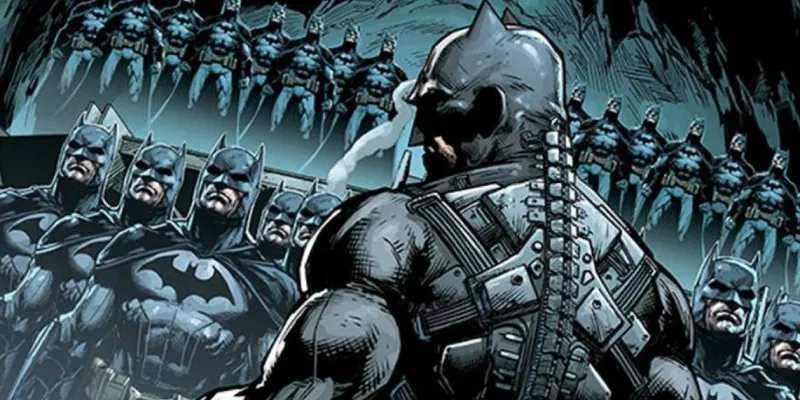
Scott Snyder and Ray Fawkes introduce an ageing, physically broken Bruce Wayne who must infiltrate LexCorp's facilities to obtain technology that can ensure Batman continues to exist.
The premise leads to a confrontation with Lex Luthor that becomes a genuine battle of wits. These aren't two characters merely trying to prove who is stronger, but two extraordinary minds constantly trying to anticipate each other's moves.
The story combines action, science fiction and a reflection on Bruce Wayne's obsession with his mission. What's more, it achieves all this in relatively few pages.
It's excellent, especially when paired with Twenty-Seven, the bonus story included at the end of Bloom. That story explored a future in which Batman lived on through successive generations of Bruce Waynes.
The two stories connect so well that they could have made an extraordinary pairing in this very volume. In fact, I think Twenty-Seven would have fitted better here than at the end of Bloom, giving the collection greater thematic coherence.
Madhouse, Gotham Is and The List: three uneven extras
The second story, Madhouse, takes us back to a Bruce Wayne who has lost his memories of being Batman. His return to the family mansion becomes a trap set by several of his former enemies.
Most interestingly, it lets us get to know Geri Powers a little better and revisits elements from Jim Gordon's time as Batman. It's a decent, enjoyable comic, but also entirely skippable.
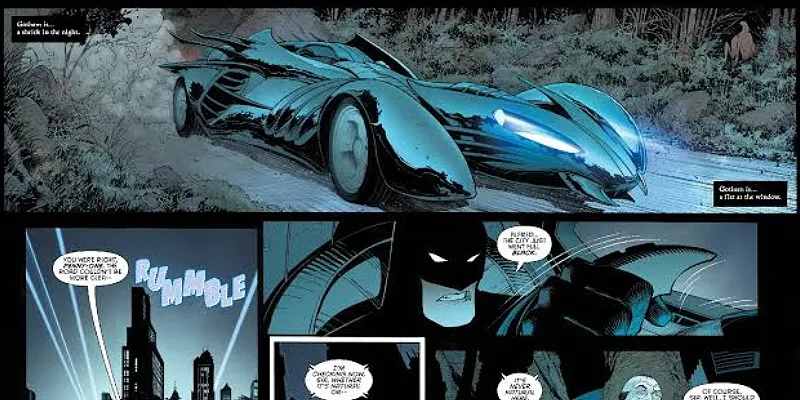
Far more significant is Gotham Is, issue 51 of Batman and Snyder and Capullo's true farewell as the main creative team.
The story revolves around a blackout in Gotham that Batman initially interprets as a possible threat. Although the comic is intriguing, its premise feels somewhat forced: it's hard to believe a detective with his resources wouldn't have discovered the incident's true nature sooner.
Even so, it works as an epilogue because it turns our attention to Gotham and its inhabitants, reminding us that the city has always been much more than a backdrop for Batman's adventures.
Finally, The List returns to Bruce Wayne's childhood and a list of personal goals that helps explain his transformation into the Dark Knight. Again, it's an interesting addition, with a psychological and emotional dimension that brings something different to the collection, although it isn't essential either.
Rebirth: the transition
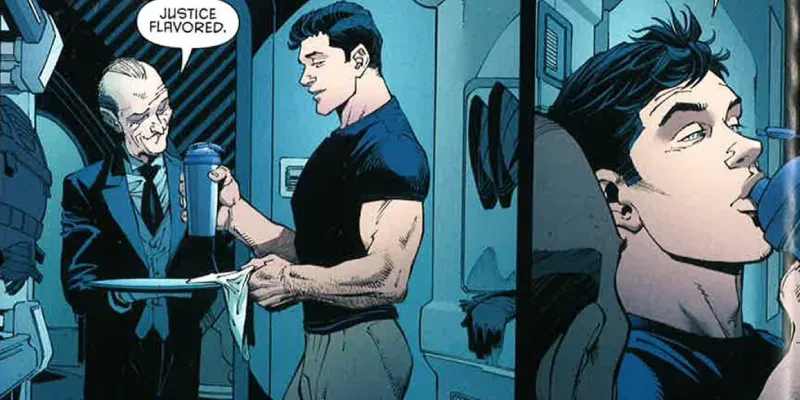
The volume ends with material from Batman: Rebirth #1, which introduces elements of the next publishing era, particularly the relationship between Bruce Wayne and Duke Thomas.
It may make sense as a transition, but it adds very little to a collection intended to close Snyder and Capullo's run.
Its purpose is more editorial than narrative: it prepares readers for what comes next. It's a decent comic, but the run would lose little without it.
Conclusion: a run that deserved a different ending
Batman: Epilogue is an entertaining collection, with interesting tales and an opening story that towers over the rest. As a farewell to such an important run, however, it leaves a rather uneven impression.
After working through stories such as Death of the Family or Zero Year, the series would have benefited from a different arrangement.
In fact, I've already argued that Endgame would have been a much more powerful conclusion. The later stories, including this volume, could easily have served as earlier interludes and supplementary chapters in the run.
In any case, Epilogue has enough worthwhile material to justify reading it, particularly its excellent opening story. What it fails to deliver is the memorable farewell that one of Batman's great modern runs deserved.
The best of Batman: Epilogue
- Remains, a superb science-fiction story built around the intellectual confrontation between Batman and Lex Luthor.
- Its narrative and thematic connection with Twenty-Seven, included in the previous volume.
- Gotham Is, a good epilogue that pays tribute to the city and its inhabitants.
- The variety of perspectives on Batman's past, present and future.
The worst of Batman: Epilogue
- The considerable gap in quality between the collected stories.
- Some of the extras add little to the overall collection.
- The inclusion of Rebirth adds little value as a conclusion to the run.
Technical details
| Feature | Information |
| Original title | Batman Vol. 10: Epilogue |
| Series | Batman — The New 52 |
| Publisher | DC Comics |
| Writing | Scott Snyder, James Tynion IV, Ray Fawkes and Tom King |
| Artwork | Greg Capullo, ACO, Rogê Antônio, Riley Rossmo and Mikel Janín, among others |
| US issues | Batman #51–52, Batman Annual #4, Batman: Futures End #1 and material from Batman: Rebirth #1 |
| Collected edition publication | 2016 |
| Length | 144 pages (US hardcover) |
| Genre | Superheroes, action, science fiction |
| Run | Tenth and final volume of The New 52 Batman |
Rating
Who it is for
✅ Readers who want to complete all ten American volumes by Snyder and Capullo.✅ Fans of alternative Batman stories.
✅ Readers interested in different takes on Bruce Wayne's legacy.
Who it is not for
❌ Anyone looking for a cohesive story arc.❌ Readers expecting a spectacular conclusion to the entire run.
❌ Those who prefer to skip supplementary stories.
❌ New readers hoping to discover Batman through a standalone story.
Frequently asked questions
What stories are included in Batman: Epilogue?
The tenth American volume collects Batman #51–52, Batman Annual #4, Batman: Futures End #1 and material from Batman: Rebirth #1. They are standalone stories exploring different periods in Bruce Wayne's life, from his childhood to possible futures for the character.
Is Batman: Epilogue the final volume by Scott Snyder and Greg Capullo?
Yes. In the US collection, this is the tenth and final volume from their run on the main Batman series during The New 52. However, not all the stories are written and drawn by both creators. Their joint farewell takes place in Batman #51.
How does Batman: Epilogue relate to Superheavy and Bloom?
Although it comes after Superheavy and Bloom in the collection, it gathers stories published at different times. Some tie into events from those volumes, while others stand alone or explore alternative futures.
What is Batman: Futures End and how does it relate to Twenty-Seven?
Batman: Futures End #1 features an ageing Bruce Wayne trying to ensure Batman's continuity through cloning technology. Its premise connects directly to Twenty-Seven, a story by Snyder and Sean Murphy imagining the character surviving across the centuries.
Do you need to read Batman: Epilogue to complete Snyder's run?
It isn't essential to understand the main story arcs, which have already concluded. However, it includes Snyder and Capullo's farewell in Batman #51 and several stories that broaden our understanding of the character, so it's worth reading if you want the complete collection.

Leave a Reply