
Bosch is one of those shows that almost never comes up in conversations about the best productions of recent years, despite being good enough to belong there, as it maintains remarkable quality across seven seasons.
The series adapts the novels by Michael Connelly starring detective Harry Bosch. I cannot judge how faithful it is because I have not read the books, but as a television series it works perfectly on its own.
This is a very solid police drama, with good stories, good characters and good scripts. Add more than solid production values and you get a package that will appeal to fans of the genre in its most classical form.
It is a measured series with no major fireworks. It makes little noise, but gets almost everything right.
I suspect part of its limited popularity may be explained by the fact that it arrived before Prime Video carried its current weight, but if you like the genre, I highly recommend both this series and its direct continuation, Bosch: Legacy, which keeps a very similar structure and tone. I will not discuss it here because it deserves a review of its own.
Bosch plot
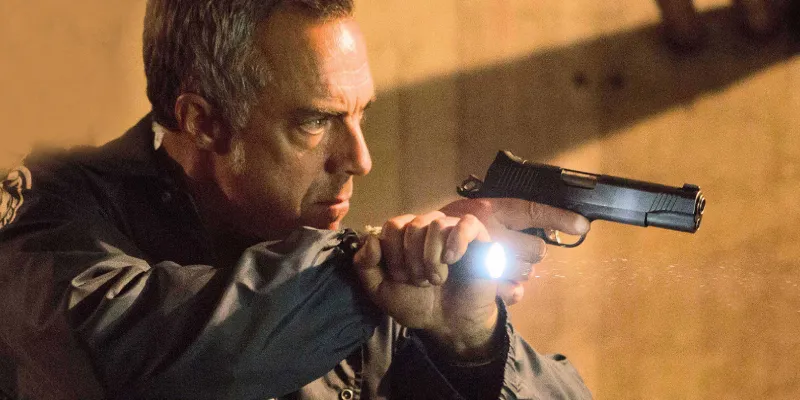
Harry Bosch is a Los Angeles homicide detective with a very clear idea of justice and a far more complicated relationship with rules, superiors and the department’s internal politics.
It is an ongoing story in which each season focuses on one case, but its actions have repercussions in later seasons. The characters progress throughout the series.
The first season introduces the character as he investigates the discovery of a child’s remains and faces the legal consequences of an earlier police action. It is the most uneven season, although it establishes the tone and characters well.
The second season expands the show’s universe with a case linked to organised crime and gives more room to Bosch’s family life and the power struggles within the police.
The third introduces an investigation that affects the protagonist more directly and again raises doubts about his methods and decisions. It also develops the personal journey of Jerry Edgar, the protagonist’s partner and friend.
The fourth is the best. Bosch must investigate a particularly sensitive murder amid political pressure and mistrust of the department itself. It is the season that best combines the main case, the supporting cast and the moral ambiguity that runs through the series.
The fifth forces Bosch into a dangerous environment while earlier decisions return to complicate his life. It maintains the strong overall standard without changing the formula too much.
The sixth develops several criminal storylines in parallel and gradually connects them.
The seventh closes the original phase and prepares the way for Bosch: Legacy. I can already tell you that it does so in a way that is consistent with the character, without revealing here how it ends.
Titus Welliver fits like a glove
The series is Titus Welliver.
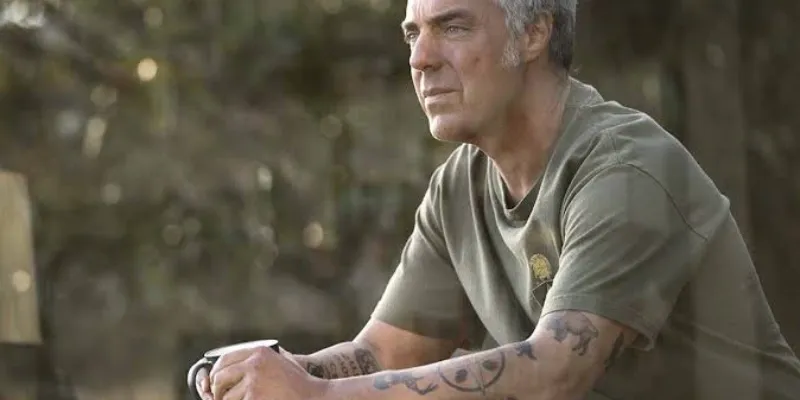
It could probably work with another actor of a similar calibre, but the character fits him so naturally that it is hard to imagine anyone else in the role. His looks say more than many lines of dialogue and convey weariness, anger, mistrust or determination without needing words or exaggerated gestures.
In fact, one of the pillars of the series is the ambiguity of his decisions. Bosch’s underlying motives are usually positive: he wants to find the truth and deliver justice. His methods, however, leave viewers uncertain, and we do not quite know what to think until the plot moves forward.
It is not clear that he is doing anything wrong, but the series keeps suggesting it, even though he is not the typical cop who justifies any atrocity because “the bad guys must be caught”. Not knowing exactly how far Harry has gone, or might go, creates a tension in the viewer that is one of the best things about the series.
The supporting characters are not NPCs
There are several worth highlighting in this respect. Five in particular:
Jerry Edgar starts as Bosch’s partner, but is never reduced to following him around and nodding. He has his own judgement, personal conflicts and an arc that becomes especially powerful after he is wounded. His return to work, his doubts during recovery and his need to rebuild his confidence provide some of his best moments.
Irvin Irving brings presence, politics and institutional ambiguity. You are never entirely sure where his responsibility as a superior ends and his personal interests begin.
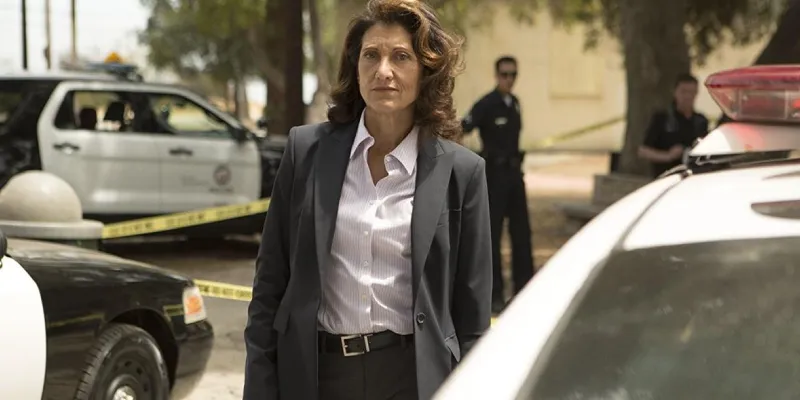
Grace Billets is one of my favourite characters. She is Harry’s boss and works as both Bosch’s friend and counterweight. She knows when to hold him back and when to let him proceed in his own way.
Honey Chandler, a lawyer, is also great and gains much more weight as the seasons go by. She is intelligent, uncomfortable to deal with and capable of standing up to Bosch without coming off badly.
Maddie Bosch, Bosch’s daughter, is the family member who humanises the detective, gives him a personal motivation and accelerates several important decisions. She is well integrated, although her role is more conventional. She serves her purpose well and is not a bad character, but she sits a little below the others.
This cast means that what I am about to tell you is not a problem.
A slow series that rarely wastes time
Bosch takes its time. Investigations occupy entire seasons, and the characters talk, hesitate, make mistakes and evolve. It is a slow-paced series.
Some plots could in fact be slightly stretched, but the dialogue and the characters’ small actions—especially those of the five above or Bosch himself—are usually interesting enough that you never feel tempted to check your phone.
The noir tone is essential here. Los Angeles is an attractive setting thanks to the atmosphere the series creates: nocturnal, adult, serious and with little room for humour.
On a personal note, the selection of jazz pieces also adds a great deal to the series. So much so that the show made me rescue my turntable from neglect and buy an IKEA KALLAX unit—the typical one with square compartments—to build my own vinyl corner. Few soundtracks can claim to have changed the furniture in your home.
What keeps it from being outstanding
The main flaw of Bosch is simple: it is a very good series, but almost never an outstanding one.
There are few truly striking moments that stay in your memory for years. Everything is solid, coherent and firmly rooted in the genre, but it lacks one more touch of personality or ambition to become something great.
As for how interest varies between seasons, I will tell you that the first season is the weakest and the fourth the best, although there are no major drops in quality. Its greatest achievement may be precisely how stable its standard remains over seven seasons.
Verdict: is Bosch worth watching?
Yes, especially if you enjoy classic police dramas, long investigations and shows you can watch gradually without needing to binge them.
It does not try to surprise you every few minutes. Nor does it aim to be an action series or keep inserting jokes to relieve the tension. It gives you solid cases, good characters, a noir tone and a protagonist full of contradictions.
If that sounds appealing, you have seven seasons ahead of you, plus a spin-off with another three waiting.
Technical details
| Item | Information |
| Original title | Bosch |
| Years | 2014-2021 |
| Seasons | 7 |
| Episodes | 68 |
| Running time | About 45-55 minutes per episode |
| Developed for television by | Eric Overmyer |
| Based on | The Harry Bosch novels written by Michael Connelly |
| Main cast | Titus Welliver, Jamie Hector, Amy Aquino, Lance Reddick, Madison Lintz and Mimi Rogers |
| Genre | Police drama, crime and noir |
| Country | United States |
| Available on | Prime Video |
| Spoilers in the review | No |
Rating
Who it is for
✔️ For viewers who enjoy classic police series.✔️ For viewers who value long, solid and consistent shows.
✔️ For viewers who enjoy investigative plots that move forward at a measured pace.
Who it is not for
❌ For viewers who need constant action.❌ For viewers seeking comedy or humour to lighten the story.
❌ For viewers who prefer series with self-contained episodes.
Frequently asked questions
Is Bosch worth watching?
Yes. It is a solid, adult and highly consistent police series, with good investigations, important supporting characters and a protagonist who raises doubts even when you understand his motives.
How many seasons does Bosch have?
Bosch has seven seasons. The seventh concluded the original series, although the character’s story later continued in Bosch: Legacy.
Is Bosch based on books?
Yes. The series adapts and combines different Michael Connelly novels starring detective Harry Bosch.
Should you watch Bosch before Bosch: Legacy?
Yes, that is the recommended order. Bosch: Legacy continues the story and relationships of the original series, so it loses much of its meaning if you do not know the previous seven seasons.
Is Bosch: Legacy a continuation or a reboot?
It is a direct continuation. Harry Bosch’s professional situation changes and the focus is shared more evenly among Bosch, Honey Chandler and Maddie, but it retains the tone and much of the original structure.
Is Bosch an action series?
Not particularly. It has moments of tension and violence, but its core lies in investigations, interrogations, character decisions and the police department’s internal politics.
Does Bosch have a conclusive ending?
The seventh season closes the main phase of the series and sets up its continuation. The conclusion works as an ending, although it clearly opens the way to Bosch: Legacy.
Where can you watch Bosch?
All seven seasons of Bosch are available on Prime Video, although the catalogue may vary by country.

Leave a Reply