

BTTM FDRS, by Ezra Claytan Daniels and Ben Passmore, was one of the comics included in a batch of Fantagraphics books I bought recently. I knew nothing about it beyond its blend of horror and social criticism, so I opened it without particularly high expectations.
And it turned out better than I expected.
It's supposed to be a horror story that uses a monster to condemn gentrification and cultural appropriation, but what I enjoyed most were its characters, the dialogue and Passmore's artwork, particularly his use of colour.
It's a straightforward, entertaining and well-told comic, surprisingly easy to read despite running to almost 300 pages. It's not particularly ambitious and doesn't stand out much as horror, but that doesn't stop it being enjoyable.
Incidentally, the title BTTM FDRS comes from bottom feeders, an English expression that can refer to people who live by taking advantage of others. It also alludes to the neighbourhood's name and, of course, the creature at the heart of the story.
BTTM FDRS plot: something strange is happening in the building
Darla is a young fashion designer looking for somewhere cheap to live in Chicago. Together with her friend Cynthia, she finds an apartment in Bottomyards, an old working-class neighbourhood that has seen better days.
The building isn't exactly welcoming, but the rent is affordable and Darla decides to stay. Soon she discovers that the place hides strange things beyond the usual defects of a neglected property.
From there, the story combines everyday situations, personal relationships and a mystery connected to the building itself, which becomes increasingly important.
The plot isn't complicated. In fact, I think one of the script's strengths is that it doesn't need to be. Daniels introduces the characters, lets them interact and gradually brings in the fantastic elements without making the story difficult to follow.
Good characters and even better dialogue
What I liked most about the writing is how the characters are developed, especially Darla and Cynthia, whose personalities are quite different.
Both have their contradictions and flaws, but they don't merely represent a particular social position. They behave like people with their own problems, interests and frustrations.
Their conversations are terrific. Daniels writes natural dialogue, with plenty of humour and flashes of irony, which lets us get to know the characters without spelling out what they're like. Their words do that.
In this respect, it reminded me a little of Tricked, by Alex Robinson, one of my ten favourite comics..
Obviously, Tricked is a much more complex and ambitious work, but both comics share something I value highly: the capacity to make relatively ordinary characters interesting through their actions, relationships and conversations..
In BTTM FDRS, there's also a rather distinctive sense of humour, even in unpleasant situations, which makes the reading more entertaining—if you find it funny, as I do.
It's not really a horror story
Although it's presented as a horror comic, I don't think that's its strongest aspect.
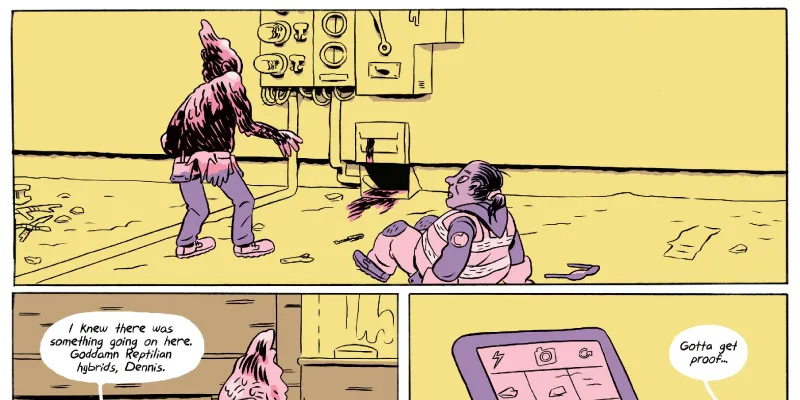
The creature living in the building is repulsive and has a fairly original design, but its appearances made me more curious than frightened.
There are grotesque scenes, physical transformations and violent moments, although the cartoonish style of the artwork and the script's humour make it hard to take it all too seriously..
Nor is the mystery constructed in a particularly surprising way. The plot unfolds conventionally and, although it holds your interest, it offers few twists that change how we see events.
That's not a flaw. I simply think horror works better as an excuse to develop character relationships and absurd situations than as the comic's main purpose.
The criticism of gentrification
One of the elements most often highlighted by critics is its condemnation of gentrification, the process whereby certain working-class neighbourhoods attract investment and wealthier new residents, potentially displacing their original inhabitants.
The creators themselves have explained that this issue underpins the story, and there are certainly elements pointing in that direction: the neighbourhood's decay, property interests and the ways some characters try to profit from their surroundings.
However, I have to admit that, although the theme is there, it feels all too familiar where I live, so it didn't particularly catch my attention while reading.
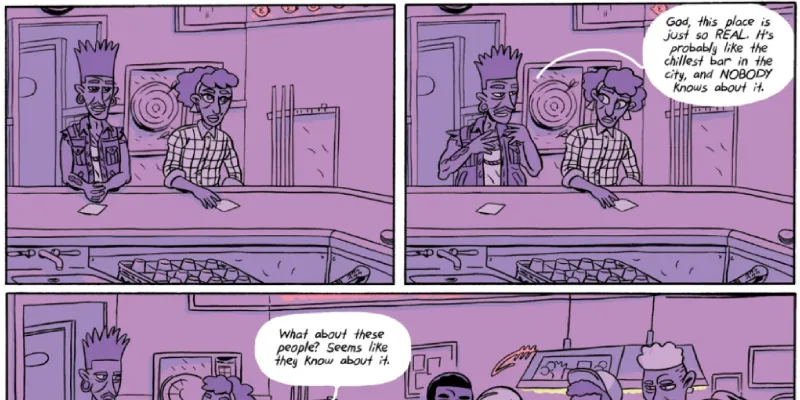
I found other social criticisms much more obvious, such as racism, cultural appropriation and the posturing of certain characters. I particularly liked the caricature of the rapper who uses a supposedly alternative aesthetic to construct an entirely artificial image.
That's precisely one of the comic's main strengths: it uses its characters to mock certain behaviours without having to spell out the message.
In any case, it doesn't delve deeply into any of these topics; that's not the kind of work it is. It uses them to create entertaining satire rather than a complex reflection on society.
Ben Passmore's artwork: clean lines and plenty of colour
The visuals surprised me too.
Ben Passmore uses very clean lines and fairly simple, expressive, cartoonish characters . His scenes are easy to follow, and his characters convey emotions with just a few strokes.
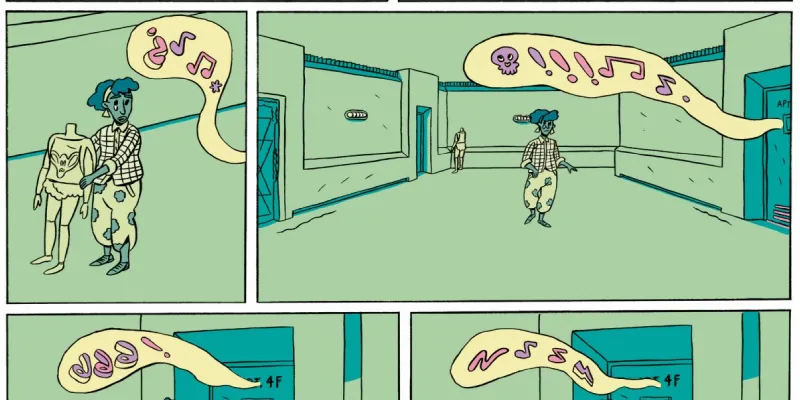
What stands out most to me, however, is the colour..
Passmore uses striking combinations of yellows, purples, greens and other intense tones that give the comic a highly recognisable visual identity..
It's curious because this is a horror story that, instead of relying on a dark aesthetic, uses vibrant colours even in its most unpleasant scenes.
The result is excellent, attractive and full of personality, both for its originality and for how easy it makes the story to follow.
Conclusion: a good, uncomplicated comic that's easy to enjoy
BTTM FDRS is a comic I can readily recommend. As a horror story, it doesn't particularly stand out, nor do I think its social criticisms have the depth some reviews attribute to them. But it has one important virtue: it's well told and entertaining from the very first page.
Daniels creates interesting characters, Passmore brings them to life with highly expressive art, and together they make almost 300 pages fly by.
It's not an ambitious work. It's a straightforward comic with humour, a little horror and well-developed characters.
Everything you need for an enjoyable read.
The best of BTTM FDRS
- The characters, well developed and with distinctive personalities.
- The dialogue, natural, funny and full of irony.
- Ben Passmore's artwork, with clean lines and very expressive characters.
- The use of colour, probably the most impressive aspect of the artwork.
- A quick, entertaining read despite its length.
The worst of BTTM FDRS
- If you're looking for a genuinely scary story, look elsewhere.
- The criticism of gentrification and social issues is interesting, but lacks the depth some critics ascribe to it.
Technical details
| Feature | Information |
| Title | BTTM FDRS |
| Writer | Ezra Claytan Daniels |
| Art and colours | Ben Passmore |
| Publisher | Fantagraphics |
| Year | 2019 |
| Pages | 288 |
| Original format | Hardcover, full colour |
| Genre | Horror, dark comedy, social satire |
| Setting | Chicago, United States |
Rating
Who it is for
✅ Readers who enjoy character-driven comics focused on dialogue and personal relationships.✅ Fans of dark humour and social satire.
✅ Those who appreciate expressive artwork and original use of colour.
✅ Readers interested in American independent comics.
✅ Anyone looking for an entertaining and relatively easy read.
Who it is not for
❌ Anyone looking for a genuinely frightening horror comic.❌ Readers expecting a complex plot full of surprises.
❌ Anyone who prefers realistic or highly detailed artwork.
Frequently asked questions
What is BTTM FDRS about?
It follows Darla, a young designer who moves into a run-down Chicago building with her friend Cynthia. There she discovers a strange creature linked to the building itself. The story blends body horror, dark comedy and social satire.
What does BTTM FDRS mean?
It's an abbreviation of bottom feeders, an English expression that literally refers to creatures feeding at the bottom, but can also describe people who live by exploiting others. The title refers to the Bottomyards neighbourhood, some characters' behaviour and the monster.
Who created BTTM FDRS?
It was written by Ezra Claytan Daniels, author of Upgrade Soul, while Ben Passmore handled the artwork and colouring.
How many pages does BTTM FDRS have?
The original edition published by Fantagraphics in 2019 has 288 full-colour pages.
Is BTTM FDRS a horror comic?
Yes, although it mixes body horror with dark comedy and social satire. It features grotesque creatures, physical transformations and violence, but also plenty of humorous moments.
Its creators use the story to explore gentrification, racism, cultural appropriation and the economic exploitation of working-class neighbourhoods. These ideas emerge through the characters, the building and the creature living in it.
Is BTTM FDRS worth reading?
In my opinion, yes. Its characters, dialogue and Ben Passmore's artwork stand out, particularly his use of colour. It's less convincing as horror, but it's a straightforward, entertaining and well-told read.
Leave a Reply