
Marvel returns to the world of WandaVision with VisionQuest, a production that brings back the android played by Paul Bettany and concludes a television trilogy that began with one of the Marvel Cinematic Universe's most original offerings.
There's one thing to appreciate right from the start: it's a bold series. Rather than simply stringing together chases and fights, it tries to explore identity, memory, artificial intelligence, fatherhood and even what we mean by a soul.
But being bold doesn't necessarily mean getting it right.
VisionQuest raises interesting questions, offers some excellent conversations and explores one of Marvel's most unusual characters in greater depth. Yet it gets lost among too many questions, plotlines, dubious explanations and a succession of enemies who fail to spark much interest.
It gives the story begun in WandaVision a good ending and is considerably better than Agatha All Along. On its own, though, it isn’t all that interesting.
VisionQuest plot summary
After the events of WandaVision, , Vision tries to understand who he really is.
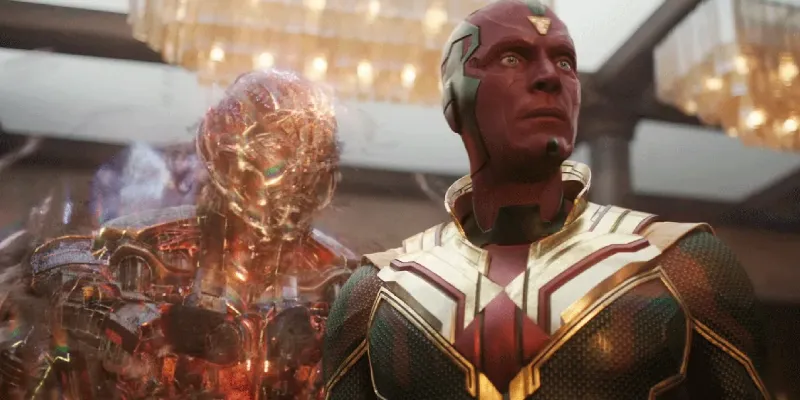
His body has been rebuilt and he remembers his previous life, but the feelings tied to those memories are gone. As he tries to find his bearings, he shares his mind with several AIs, including J.A.R.V.I.S., F.R.I.D.A.Y., E.D.I.T.H. and none other than Ultron..
His isolation ends when Thomas Shepherd appears, a young man whose memories link him to the family Vision formed with Wanda Maximoff.
As both try to understand their identities, a bounty hunter, a mysterious artificial intelligence and several characters connected to the origins of the technology that created Vision enter the picture.
The series thus combines a journey of self-discovery with a succession of threats that converge in a finale without much substance.
The best of VisionQuest: fathers, sons and conversations
The most interesting thing about VisionQuest is how deeply it explores its protagonist.
Vision has always been a supporting character, but a fascinating one at heart: an AI that can feel human emotions without quite understanding them..
The series revisits that idea through his memories, his relationship with Tommy and, above all, his conversations with Ultron.
That relationship is one of the show’s strengths, perhaps because the sinister android is so well played by James Spader. A genuinely compelling villain.
Ultron is, in a sense, Vision's father. Yet while both are artificial intelligences confronting humanity's contradictions, each chooses a different path. One has decided to destroy humans, while the other has tried to understand them and live alongside them.
The series succeeds in humanizing that father-son relationship. Its finest moments come when they discuss their decisions, their losses and the possibility of change.
Paul Bettany and James Spader work wonderfully together, and their performances give depth to conversations that can sometimes become overly abstract.
More generally, VisionQuest works much better in these small character moments than when it tries to tell its larger story..
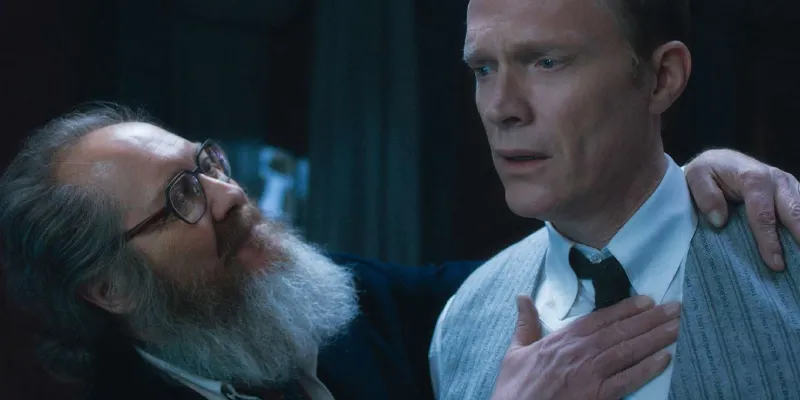
Too many enemies for eight episodes
One of the biggest flaws of VisionQuest is its inability to stay focused. That applies both to the themes it tackles and to its villains.
First there's Paladin, the bounty hunter hired to capture Vision. Then comes Jocasta, linked to Josephine “Jo” Carrington, a researcher central to the development of artificial intelligence in the Marvel universe.
There’s also Ultron, who shifts between threat, companion and father figure. Then there’s Virgil Horton, grandson of Phineas Horton, the scientist who created the original Human Torch. That Human Torch was one of the earliest artificial beings and a different character from the member of the Fantastic Four.
The threats keep changing, but it's obvious that there are too many antagonists, shifting alliances and conflicts for eight episodes..
And the problem isn't just the sheer number: it's that none becomes a truly memorable villain. Paladin switches roles, Jocasta pursues her own goals, Virgil turns out to be behind the main conflict and Ultron resurfaces as a threat. As soon as one seems to be the main villain, the show introduces another.
The result is a scattered story that spends far too much time connecting the dots and far too little developing what actually matters: its characters.
Tommy's soul and other unconvincing explanations
VisionQuest also asks us to accept some rather curious explanations. Tommy's case, for instance.
Remember that Wanda's sons were created through magic and vanished when the Westview spell ended.
In Agatha All Along, we learned that Billy's soul had survived, taking over William Kaplan's body after an accident. Billy later used his powers to place his brother Tommy's spirit inside the body of Thomas Shepherd, a teenager who had drowned.
This is the explanation revisited in VisionQuest. Yes, there is an explanation, but it's anything but convincing. We're talking about a magically created character whose spirit survives his disappearance, inhabits someone else's body and retains extraordinary powers.
How exactly does that transfer work? What happens to the original boy's identity? Why does he retain certain abilities?
The series explores the emotional consequences of the process, but its rules remain unclear..
Something similar happens with the artificial intelligences housed in Vision's mind. Depicting them as characters sharing a mental space is original and fun, but we never quite learn how they are organized, how much autonomy they have or what their limits are.
As a result, their actions and solutions often seem dictated solely by the script's needs rather than by previously established rules. This lack of clear rules completely pulled me out of the story.
Conclusion: more interesting for Marvel's future than on its own merits
All things considered, VisionQuest is a series that deserves some credit for trying something different.
Rather than settling for a conventional superhero adventure like so many Marvel series, it asks questions about identity, memory, the soul and family. Some of its finest moments are the quietest ones.
But a daring concept is not necessarily a successful one..
The many themes and plotlines it tackles, the constant changes of antagonist and the unconvincing explanations make the whole much less interesting than some of its individual scenes.
As a conclusion to the story begun in WandaVision, it works. It's not nearly as good as that excellent series, although it's considerably better than Agatha All Along..
Curiously, the part of the entire series likely to have the biggest impact comes after the ending. There are two post-credits scenes that matter enormously for the MCU in the short term — and probably the medium term too.
In other words, VisionQuest will end up mattering more for the stories it sets up than for the one it tells, which neatly sums up my opinion of the series.
The best of VisionQuest
- Its courage in tackling artificial intelligence, identity and human emotions.
- The father-son relationship between Ultron and Vision, probably the show's most interesting element.
- The performances of Paul Bettany and James Spader.
- The intimate conversations, far better handled than the overall plot.
The worst of VisionQuest
- Too many antagonists and conflicts for eight episodes, and not one memorable villain.
- An unfocused story that offers little interest on its own.
- The explanation of Tommy's spirit, his new body and his powers is unconvincing.
- The rules governing the artificial intelligences inside Vision are not sufficiently clear.
Technical details
| Feature | Information |
| Original title | VisionQuest |
| Year | 2026 |
| Creator | Terry Matalas |
| Production company | Marvel Television |
| Platform | Disney+ |
| Episodes | 8 |
| Lead actor | Paul Bettany |
| Main cast | James Spader, Ruaridh Mollica, T'Nia Miller and Todd Stashwick |
| Genre | Science fiction, superheroes and drama |
| Universe | Marvel Cinematic Universe |
| Related series | WandaVision and Agatha All Along |
Rating
Who it is for
✅ WandaVision fans who want to see the protagonists' story brought to a close.✅ Viewers interested in artificial intelligence, memory and identity.
✅ Those who follow every MCU production and want to understand the links to upcoming stories.
Who it is not for
❌ Anyone expecting a series as original and well constructed as WandaVision.❌ Anyone looking for a standalone story worth watching on its own.
❌ Anyone who needs clear explanations for its magical and technological elements.
Frequently asked questions
What is VisionQuest about?
The series follows Vision after he regains his memories, but not the emotions tied to them. As he tries to rebuild his identity, he meets Tommy Shepherd, a young man connected to his family past, and faces several threats linked to the origins of Marvel's artificial intelligences.
How many episodes does VisionQuest have?
The series has eight episodes, released on Disney+ between October and November 2026.
Should you watch WandaVision and Agatha All Along before VisionQuest?
It's highly recommended. WandaVision explains how Vision ended up in his current situation, while Agatha All Along explores Billy's survival and what happened to Tommy's spirit.
How does Tommy get a body in VisionQuest?
Tommy doesn't regain his original body. Billy uses magic to transfer his brother's spirit into the body of Thomas Shepherd, a teenager who dies by drowning. Tommy retains memories of his previous life and displays super-speed powers.
Who is Virgil Horton in VisionQuest?
Virgil Horton is the grandson of Phineas Horton, a pioneer in creating artificial beings. He helped develop AI technology and was involved in Vision’s reconstruction. He plans to transfer his own consciousness into Vision’s body to reunite with Jocasta.
What is the relationship between Ultron and Vision?
Ultron helped create Vision, so their relationship can be seen as that of father and son. The series explores that bond and contrasts their differing responses to humanity, love and loss.
What happens in the VisionQuest post-credits scenes?
The first reveals that Ultron has survived and still possesses Jocasta's code, potentially allowing her to be rebuilt. In the second, Doctor Doom appears before Wanda Maximoff among the ruins of Mount Wundagore and awakens her, setting up future MCU events.
Is VisionQuest worth watching?
Especially if you want to finish the story begun in WandaVision or follow the connections across the Marvel universe. It has good ideas, interesting performances and a well-developed relationship between Vision and Ultron, but its plot is overly scattered and not especially interesting in its own right.

Leave a Reply